
Self-heal
Prunella Vulgaris

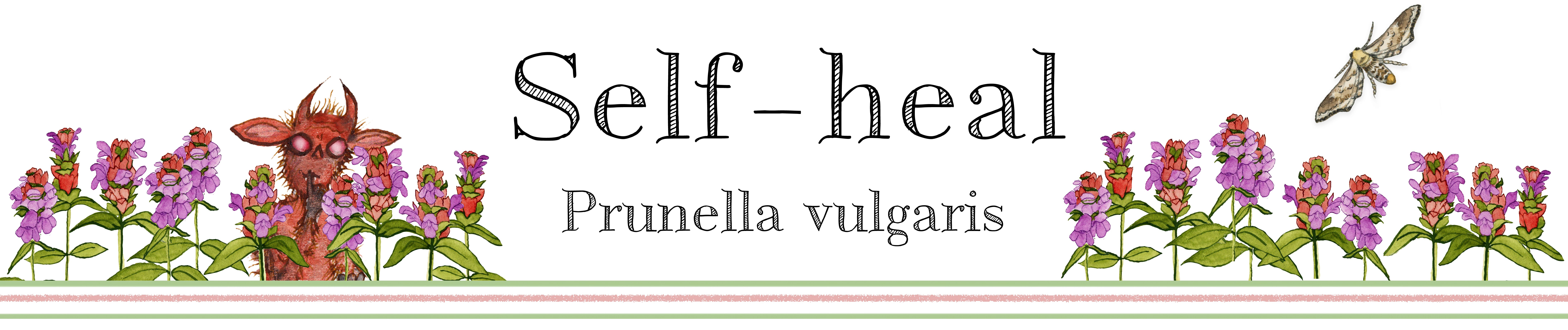
Self-heal is one of those contrary plants which, depending on where you live, is said to either attract the devil or send him packing.
In the county of Hampshire in the UK, for instance, children were warned never, ever to pick Self-heal, as if they did, the devil was likely come for them in the middle of the night and they’d never be seen again. Then again in Ireland, Self-heal was one of seven plants that was said to protect you from the devil and all things supernatural (the other six plants being St John’s Wort, Verbena (Vervain), Eyebright, Mallow, Yarrow and Germander Speedwell).
Whether or not the herb had super-natural powers to repel or attract Beelzebub, it was, and still is to some extent, considered to be an effective treatment for a number of different ailments and afflictions - hence its common name. The Herbalist John Gerard (1545–1612) wrote in his ‘Herbal’ (1597):
The decoction of Prunell made with wine or water, does join together and make whole and sound all wounds both inward and outward.
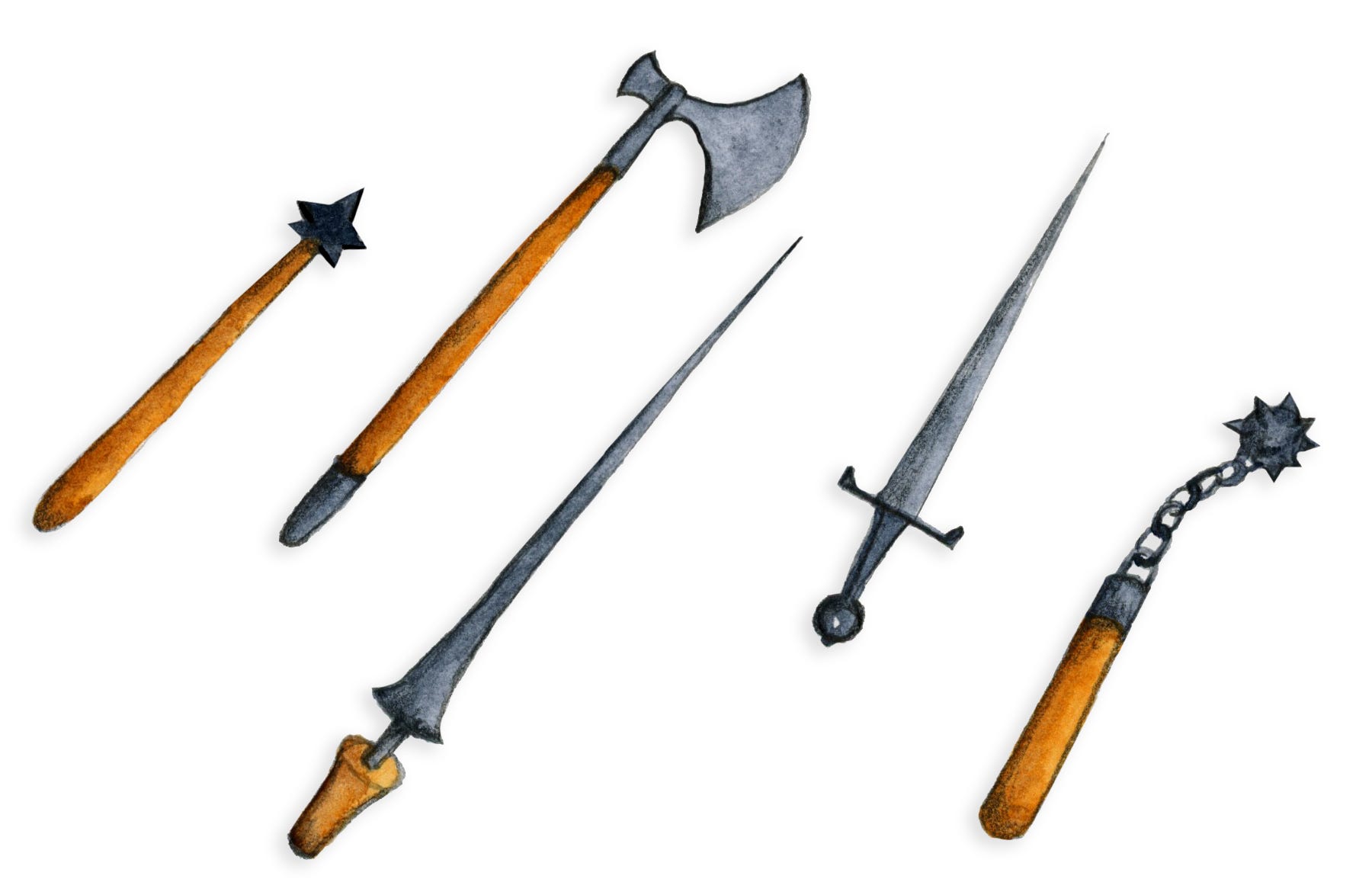
Already in the middle ages Self-heal was used to heal different wounds, including wounds suffered on the battlefield. Thinking of the various types of horrifying medieval weaponry that were around then, one can imagine how extreme those wounds could be.
If you were lucky enough that your injuries occurred in a field where the Self-heal was in bloom, you could - at a push - have made a poultice for yourself by chewing the flowers and applying the paste to your wounds, which was said to staunch the bleeding. Alternatively, if there was an apothecary nearby, you could buy a ready-made salve which would have been a mixture made of crushed flowers and leaves with lard, tallow or wax. One can imagine enterprising apothecaries wandering the aftermath of battlefields, selling their wares to the wounded survivors. Tough times.
To treat internal haemorrhages, the flowers were simmered in red wine to create a tincture.
Self-heal has been grown in herb gardens since ancient times. Archeological excavations in the 1970s of various medieval gardens showed that Self-heal was grown alongside other healing plants like Opium Poppies and Verbena (Vervain), and plants used for pottages, like Sow-thistle, Vipers Bugloss, Cress and Parsley. In 1968, archeological research found significant traces of Self-heal at the pre-historic sites at Silbury Hill and Avebury (in Wiltshire England) from thousands of years ago. Interestingly, Self-heal has also been used in Chinese Medicine for at least 2,000 years. It was recorded in the ‘Divine Farmer’s Materia Medica’ compiled during the first two centuries AD.
The scientific name ‘Prunella vulgaris’ is also connected to Self-heal’s healing properties. It originated from the word Bräune (or Breuen). This is not the modern German word for brown, but Old German for serious contagious, inflammatory infections of the throat, nose and tonsils, like Diphtheria, Croup and Quincy. Self-heal was used as a treatment to clear these throat infections: a strong tea was brewed from the dried leaves and flowers and sweetened with lots of honey. The patient would gargle with the warm liquid to draw out the infection.
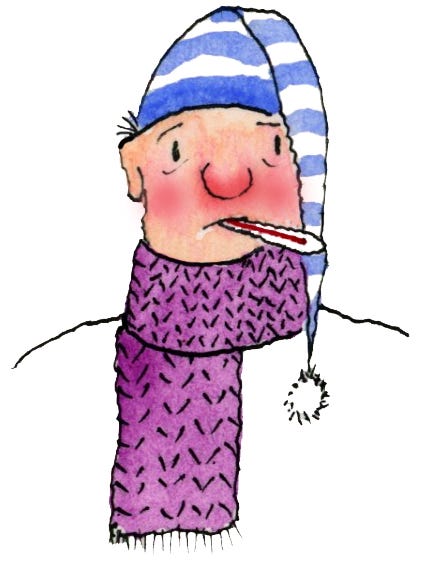
Over time, Bräune became Brunnell, but when in 1753 Linnaeus wrote the name in his “Species Planetarium”, he misspelled it as Prunella, which was never corrected.
‘Vulgaris’ means common or ordinary.
There’s not a lot of evidence based data collection when it comes to folklore remedies. How its use in various treatments became popularised often remains a mystery. But interestingly, modern research now suggests there is more than a little to the healing powers of Self-heal.
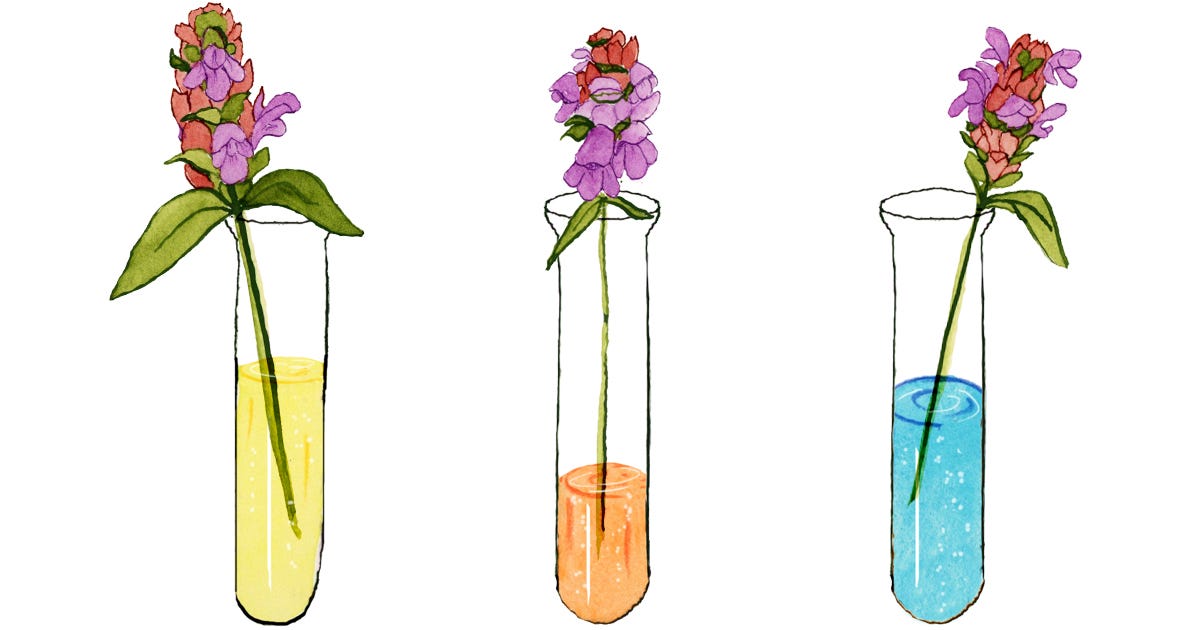
In test-tube research conducted since the early 2000’s, it has been shown that the Self-heal plant contains natural anti-inflammatory agents, natural antibiotics and anti-bacterial properties, which have been shown to suppress Staphylococcus Aureus, a bacterium which can cause severe infections. More research is now being done into possible applications of Self-heal as a treatment for various cancers, HIV, diabetes, herpes and thyroid problems. Another example of where the ancients didn’t always get it wrong.
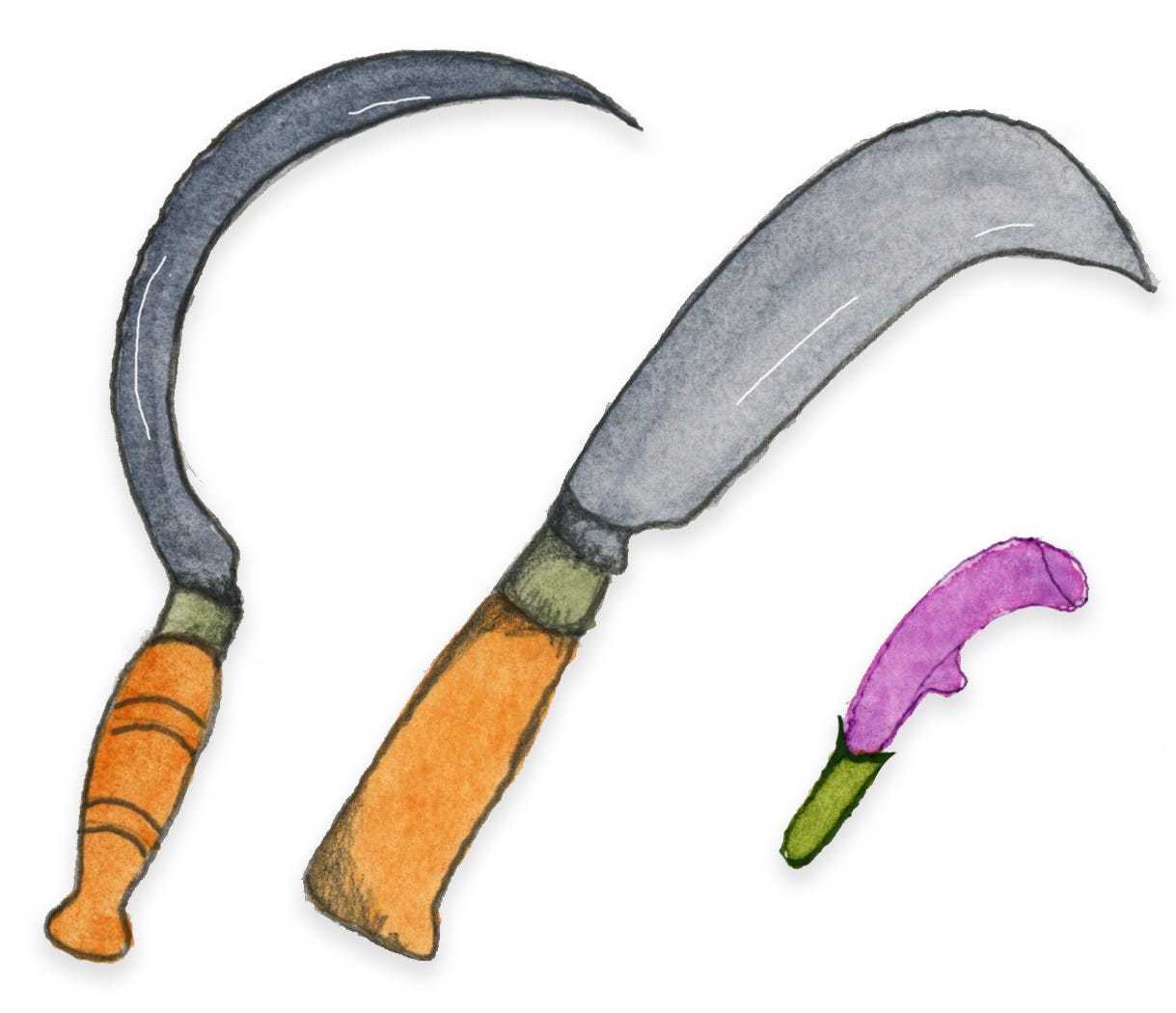
Other names for Self-heal are Heal-all, Woundwort, Sicklewort, Carpenter’s herb and Hookheale (after the flower’s shape of a carpenter’s bill hook).
If you are looking for the etymology of a specific wildflower, you can find all flowers covered so far in Flowerology in the alphabetical archive. A list of all the books used for researching Flowerology are in the Reading List.
Flowerology is a reader supported publication. To support my work you might consider to subscribe for free,
buy me a tea to help keep me awake when researching ancient herbals and plant-lore books till deep in the night (Thank you!)
or simply click the heart shaped ‘like’ button at the very top or bottom of this post. Thank you so much!
This newsletter is NOT a field guide for flower identification. It’s often difficult to tell the difference between harmless plants and poisonous plants and some flowers are rare and protected by law, so, NEVER pick or use any plants or flowers if you’re not sure about them.
illustrations and text ©Chantal Bourgonje
One of my favourite wildflowers, what an interesting read.
Gewone Brunel, een prachtig plantje!