
Mugwort
Artemisia Vulgaris

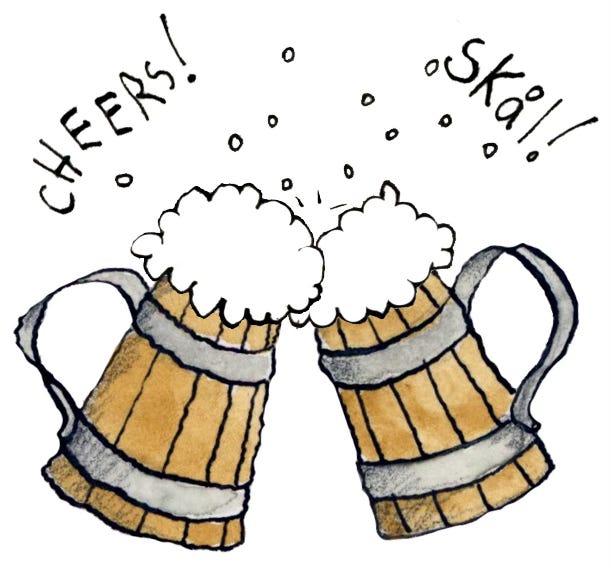
Before hops were introduced in the 1400’s, Mugwort was one of the herbs that was used to flavour ale, offering one possible explanation for how the plant received its name. “Mugs’ were at the time the main receptacles used for drinking ale, and the word ‘Mug’ came to English via the Vikings, who were known to enjoy a drink or two (‘Mugge’ in Norwegian and ‘Mugg’ in Swedish). Combine this with ‘wort’ (from Anglo Saxon, wyrt), meaning ‘herb’ and you get a plant name meaning something pretty close to ‘ale herb’.
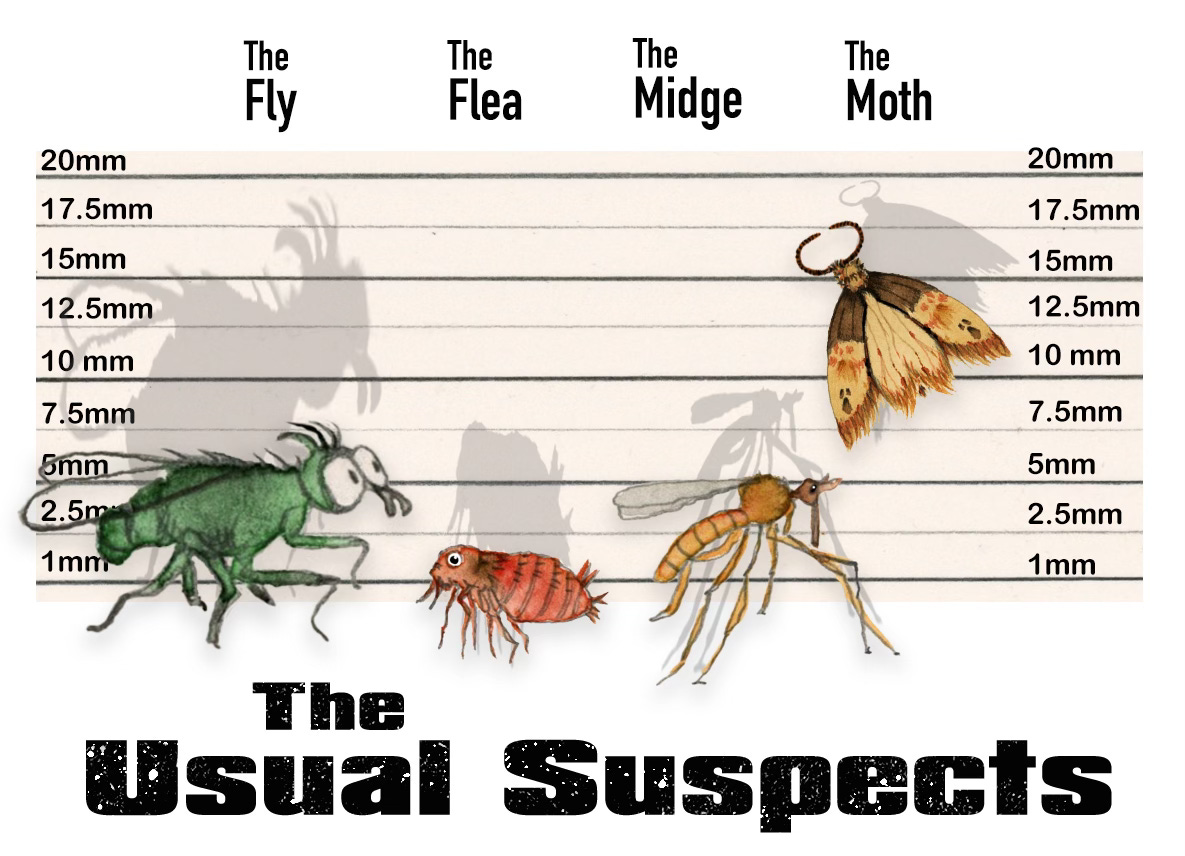
Another explanation comes from the proto Germanic word ‘Muggiwurti’, ‘Muggi’ meaning ‘fly’ or ‘midge’, and ‘Wurti’ meaning ‘herb’. Swiss engraver Franz Hegi Von Zurich (1774-1850) observed farmers hanging bunches of Mugwort on stable ceilings to manage fly infestations. Hegi thought flies liked to sit on Mugwort and that once plenty of them had gathered, the farmers would throw a bag over the lot and remove the insects together with the herbs. He probably misinterpreted what the farmers were doing: Mugwort has been known as an insect repellent for over 2,000 years. Greek physician Dioscorides (40-90AD) recommends, in his “De Materia Medica”, scattering flowering Mugwort tops over swept floors to prevent fleas and moths.
The Middle English word for moth is ‘moughte’, which makes it another possible candidate for the ‘mug’ in Mugwort.
And then there’s Ælfric of Eynsham who way back in the tenth century was already researching the origins of plant names. In his Glossary (dated 995AD) he explains that the original word for Mugwort was ‘Modirwort’ (Motherwort), but that its spelling changed over time to ‘Mugwort’ as a result of the sloppy pronunciation of common folk, or as he described it:
“Mogwort, al on as seyn some, modirwort : lewed folk þat* in manye wordes conne no rygt sownynge, but ofte shortyn wordys, and changyn lettrys and silablys, þey corruptyn þe o in to u, and d into g, and syncopyn i , smytyn awey i and r, and seyn mugwort.”
*if you pronounce ‘þ’ as ‘th’ and it’s a little easier to read.
Mugwort is the first herb mentioned in the Nine Herbs Charm, detailed in the 10th century Anglo-Saxon collection of herbal remedies and prayers known as the Lacnunga. In those days, the preparation of remedies was often done whilst reciting charms, which were frequently a combination of Pagan and Christian content, and the Nine Herbs Charm was no exception. When the salve was being prepared - for healing infections and poisoning - it was necessary to chant the full 63 lines. This is the first verse:
“Remember, Mugwort, what you made known,
what you determined at the Place of Proclamation.
You are called “Una,” the oldest of plants.
You have the power against three and against thirty,
you have power against venom and against infection,
You have power against the enemy who journeys throughout the land”

Hildegard von Bingen (1098-1178), called Mugwort ‘biboz’ and used it to heal infected wounds. ‘Biboz’ comes from Middle High German and means to bump or stomp. In Germany Mugwort was pounded for use as a herb in cooking and was called ‘biboz’ or ‘bivuoz’ (now Beifuss). In Holland it is named similarly, Bijvoet. All to do with pounding and nothing to do with bees (bij) or feet (voet) which Dutch and German readers might have expected.
However, there is a connection between feet and Mugwort: stuffing it in your shoes apparently protects you from harm and prevents fatigue on long journeys.
In the middle ages, Mugwort was also known as ‘St John’s Plant’. People believed that John the Baptist wore a belt of Mugwort, and that having your own belt, wreath or just a bunch of Mugwort about your person, would give you protection from an eclectic collection of evils including wild beasts, evil spirits, demons, witchcraft, tiredness, thunderstorms, and sunstroke. But only if you picked it on the evening of the 24th of June (St John’s day).
It seems Jacob Theodorus (1522-1590), the father of German botany, didn’t approve of this originally pagan tradition. He writes:
“Women still gather this herb for their bunches of herbs together with other herbs, and use it for practising strange idolatries and all sorts of madness.”
Tansy, Yarrow and Wormwood were the other herbs that made up these bunches, which were consecrated in church with whisperings of the gospel of Saint John.
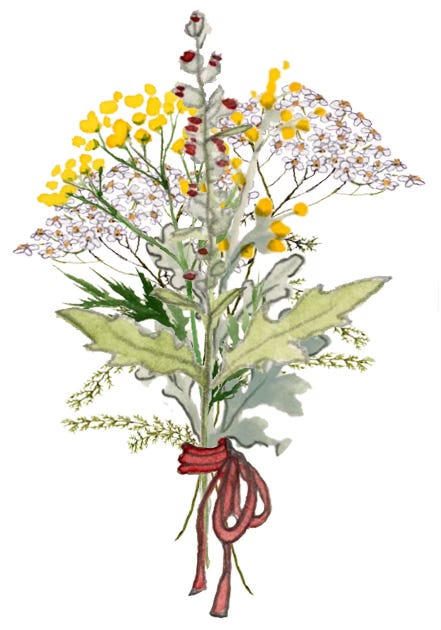
It’s another example of a pagan tradition adopted by Christians and was reportedly still practised in some European churches in the 1990’s. If you just wanted to focus on your health, rather than ward off evil, dancing around St John’s fires on the 24th of June and throwing Mugwort into the flames would do the job. Note that in France it’s called ‘Herbe de la Saint Jean’ too.
Mugwort was also called ‘Sailor’s Tobacco’. The dried herb was often smoked in coastal areas where it is abundant. In France it is similarly known as ‘Tabac de Saint-Pierre’. St Peter being a fisherman.
When it comes to the Latin name, ‘Artemisia’ relates to the Goddess Artemis, protector of women and patron of childbirth (see also Wormwood). The Physicians of Myddfai - doctors of Welsh prince Rhys Gryg (1160-1234) - claimed Mugwort could help induce child birth when tied to the the left thigh of the mother to be. Was Ælfric of Eynsham, with his claim that Mugwort was a distortion of Motherwort, perhaps on to something?
Other names for Mugwort include: Chrysanthemum Weed, Common Mugfelon Herb, Felon Herb, Old Man’s plant, Old Uncle Henry, Wild Wormwood, Apple-pie, Fat Hen, Fleabane, Maderwort, Moderwort, Motherwort, and Mugweed.
Flowerology is a reader supported publication. To support my work you might consider to subscribe for free, buy me a tea (to keep me awake when reading ancient herbals till deep in the night) or simply click the heart shaped ‘like’ button on the top or bottom of this post (it helps the algorithms apparently). Thank you!
If you’re curious about other wildflower names, you can find all flowers covered in Flowerology in the alphabetical archive. And you can find a list of all the books used for researching Flowerology in the Reading List which is frequently updated with new etymology dictionaries, herbals and plant lore books.
This newsletter is NOT a field guide for flower identification. It’s often difficult to tell the difference between harmless plants and poisonous plants and some flowers are rare and protected by law, so, NEVER pick or use any plants or flowers if you’re not sure about them.
illustrations and text ©Chantal Bourgonje
Interesting, now I know where 'bijvoet' is coming from
My favorite quote: “Women still gather this herb for their bunches of herbs together with other herbs, and use it for practising strange idolatries and all sorts of madness.” All sorts of madness… a fun read. Thank you!