
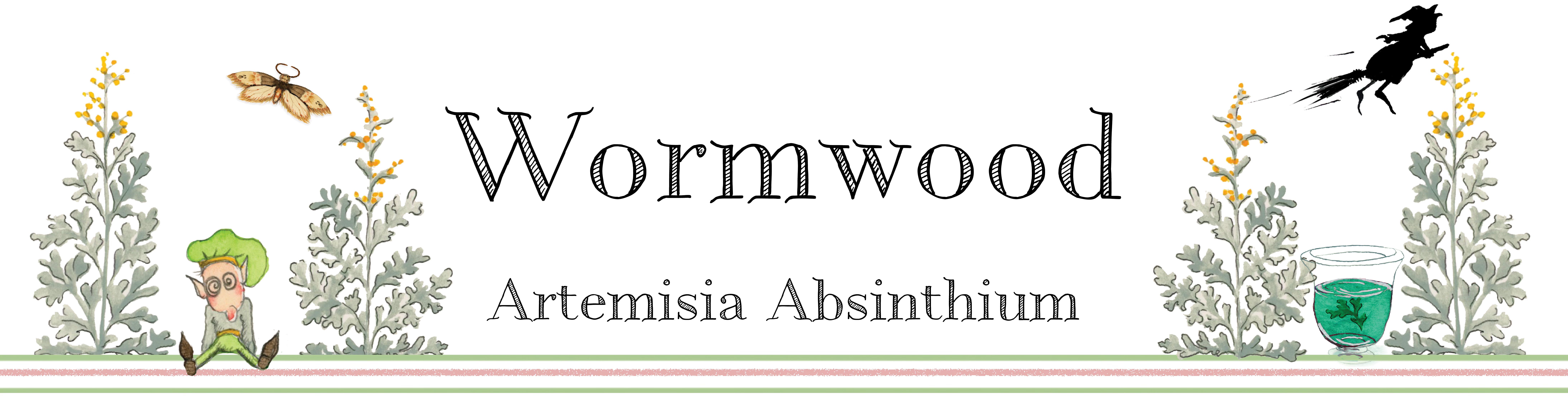
Wormwood
Artemisia absinthium

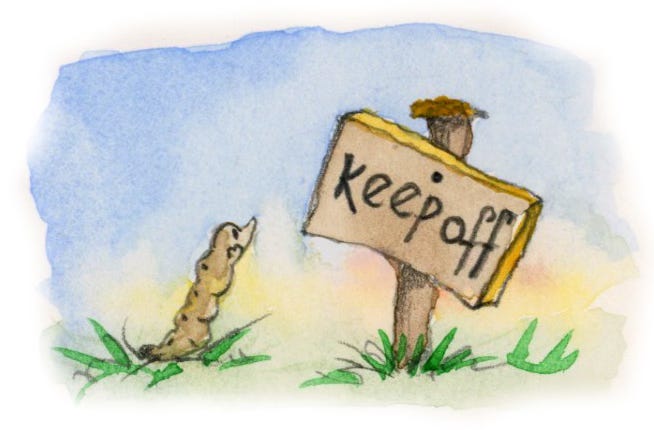
As we’ve seen previously, the origins of plant names can be obscure and sometimes controversial. With ‘Wormwood’, some experts have played it a little safe, commenting simply that the word’s origins are ‘unkown’. Others have gone more out on a limb. R.C.A. Prior, in his Popular Names of British Plants (1879) mentioned that the word ‘Wormwood’ might be originally of Celtic origin ‘wherow’, meaning ‘bitter’ (which it certainly is). But he thought it more likely to have come from Old Saxon (spoken in Germany in the 8th-12th century), with the word ‘Weremede’, a combination of ‘wheren’ - meaning ‘to keep off’ - and ‘mod’ - meaning ’maggot’, together, meaning ‘maggots, keep off’.
But in later Anglo Saxon, the word for ‘Wormwood’ was ‘Wermod’, the first part of the word referring to ‘worm’. Compare this with the Old Saxon (as described above) where it was the second part of the word that referred to ‘maggot’. Okay, maggots and worms are different, but it does feel like an additional derivation complication. Maybe it’s one of the reasons etymologists often played it safe with their “unknown origin” line. Whatever, it does seem to have had something to do with creepy crawlies, and as R.C.A. Prior said:
“Whatever may be the origin of the word, it was understood in the middle-ages as a worm-medicine”.
Over time, in German, Wermod became Wermuth. If you say ‘Wermuth’ out loud with a German accent, you’ll probably get where this is going: ‘Vermouth’, which is the bitter-tasting fortified wine which is flavoured with Wormwood.
Not only was Wormwood used as a flavouring and a medecine for internal worms and parasites, it also provided, apparently, first-rate protection against evil spirits. Especially the kind that lure you to your end with their singing. if you needed protection from sorcery or the evil eye in the 14th century, you’d hang some on your front door. In the 1600’s people believed you’d be safe from the Plague if you stuffed plenty of Wormwood in your ears and nostrils.
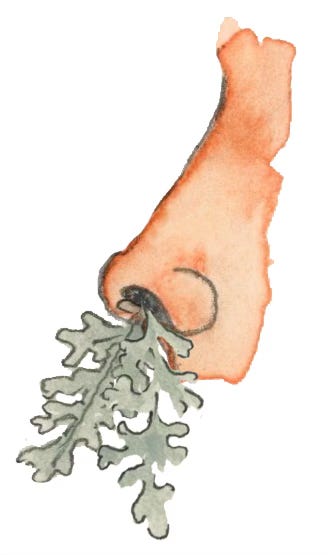
And let’s not forget that old Hildegard von Bingen (1098-1179) who claimed it was a good remedy for when you were suffering from vermin in the ears.
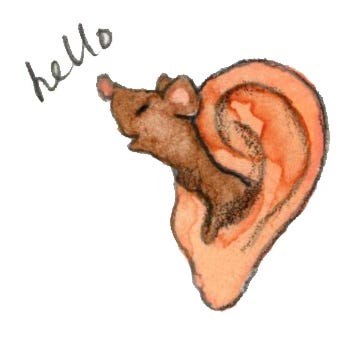
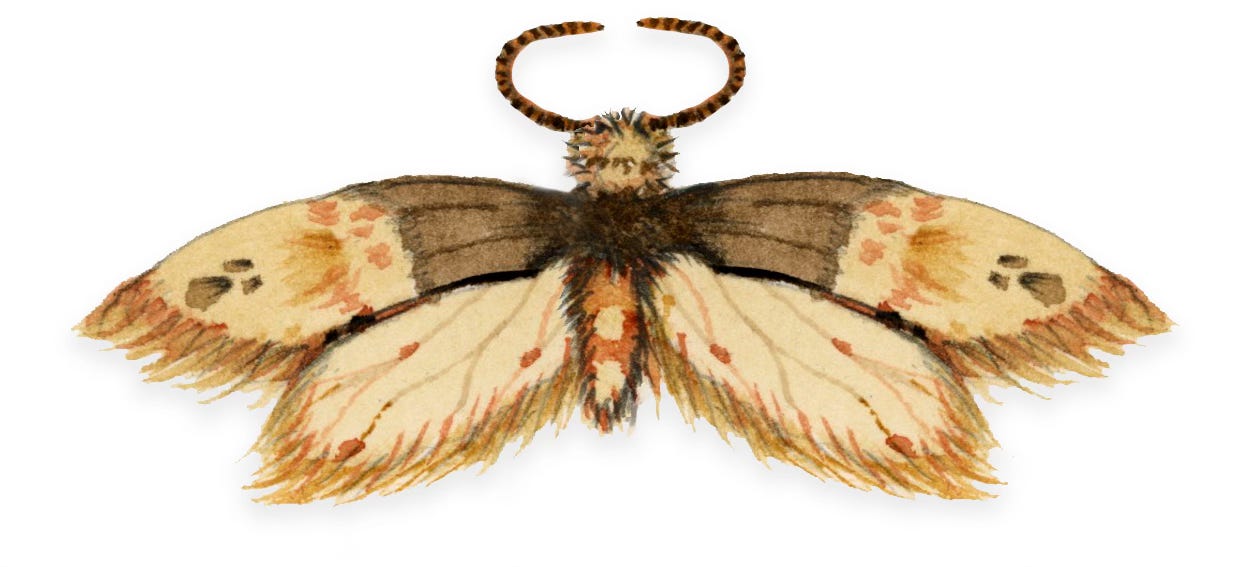
Witches, evil spirits and ear problems aside, Wormwood’s fragrance also repels many non-human or spirit creatures. People used it as a strewing flower against fleas and gnats, and used it, dried, in linen chests to shield their garments from moths and mice, not wanting the rodents nibbling their finery and making nests out of it. Most animals dislike Wormwood. Grazing animals avoid it.
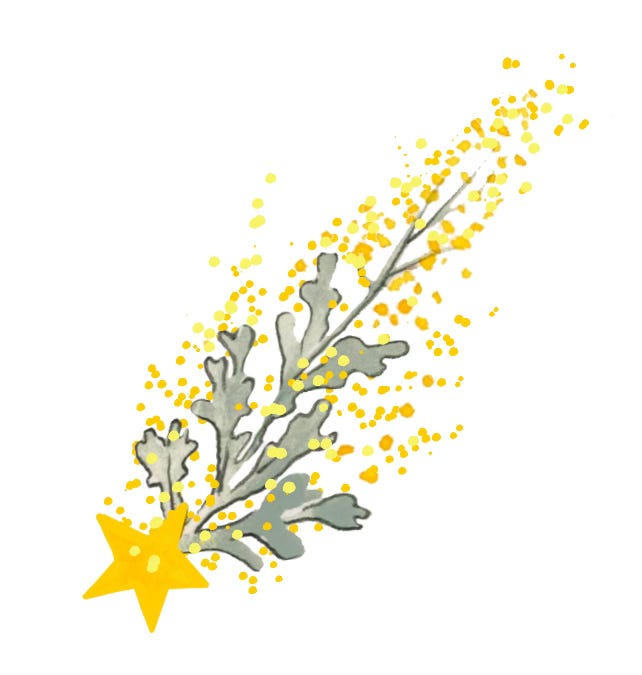
Despite all its magnificent protective properties, the word ‘Wormwood’ comes with ominous connotations, probably because it was mentioned in the Bible, with the Book of Revelations saying:
“And the name of the star is called Wormwood: and the third part of the waters became wormwood; and many men died of the waters, because they were made bitter.”
Frightening associations. Its bitterness had some, to modern minds, unexpected uses too. In Shakespeare (Romeo and Juliet, Act 1, Scene 3), Juliet’s nurse speaks of how she weaned the baby Juliet with Wormwood, presumably by spreading it on her nipple.
Wormwood is indeed extremely bitter and that’s how it got the second part of its scientific name, ‘Absinthium’, from the Greek word ‘Absinthion’ which means ‘undrinkable’. Wormwood was a major ingredient of ‘Absinthe’, a spirit with a bad reputation, made from various plants. It was originally created in 18th century Switzerland and popular amongst artists and writers in the late 19th and early 20th century.
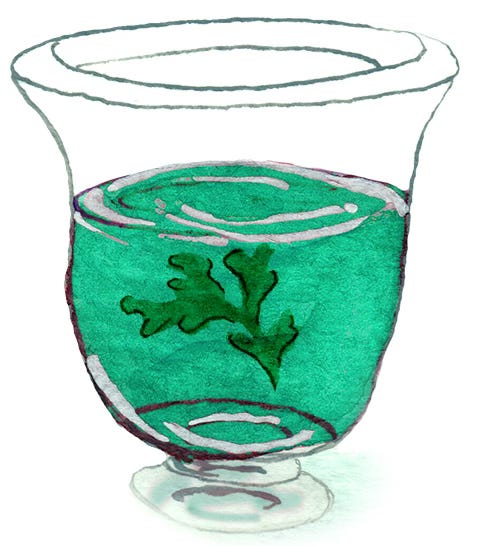
But then the Prohibitionists claimed that Absinthe could cause madness and hallucinations. The bad PR worked. It was banned in the US and various European countries in the early 1900’s.
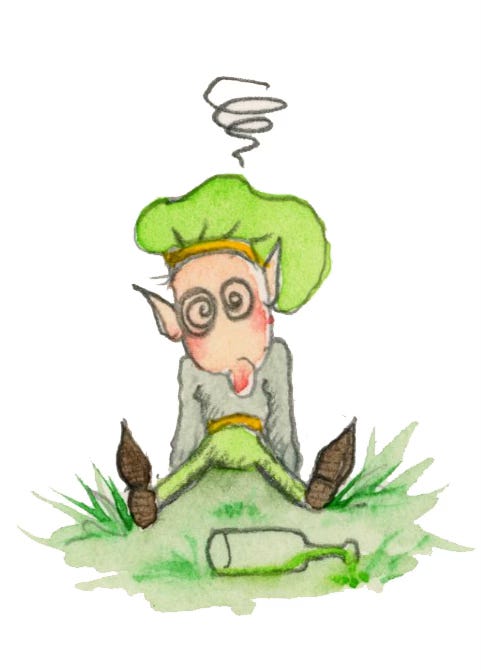
We now know that the amount of hallucinogenic compounds in Absinthe are not enough to cause madness. Any erratic behaviour has more to do with its high alcohol content (45-89.9%), than with the small amounts of thujone (the culprit compound) from Wormwood. Since the 1990’s Absinthe is no longer illegal.
The first part of Wormwood’s scientific name is ‘Artemisia’. Pliny (23-79AD) claimed that Artemisia, wife of Mausolus, ruler of Caria (377–353 BC) now part of Turkey, had the plant renamed after her. It was fashionable amongst important people in those days to have a plant named after you. However, in the 4th century Herbarium of Pseudo-Apuleius it states that ‘Artemisia’ is named after the goddess Artemis:
‘Of these worts that we name Artemisia, it is said that Diana did find them and delivered their powers and leechdom* to Chiron the Centaur, who first from these Worts set forth a leechdom, and he named these worts from the name of Diana, Artemis, that is Artemisias.’
*note: leechdom means remedy or medicine in Old English
Greek goddess Artemis (Roman goddess Diana) was goddess of nature, animals, hunting and the moon. She was also protector of childbirth. Historically Wormwood was used to ease menstrual pain, but any real benefits for this have not yet been proven.
Other names for Wormwood are: Green Ginger (the root is aromatic and looks a little like ginger root), Common Sage Wort (Sage also contains thujone) and Wermut.
Flowerology is a reader supported publication. To support my work you might consider to subscribe for free, buy me a tea (to keep me awake when reading ancient herbals till deep in the night) or simply click the heart shaped ‘like’ button on the top or bottom of this post (it helps the algorithms apparently). Thank you!
If you’re curious about other wildflower names, you can find all flowers covered in Flowerology in the alphabetical archive. And you can find a list of all the books used for researching Flowerology in the Reading List which is frequently updated with new etymology dictionaries, herbals and plant lore books.
This newsletter is NOT a field guide for flower identification. It’s often difficult to tell the difference between harmless plants and poisonous plants and some flowers are rare and protected by law, so, NEVER pick or use any plants or flowers if you’re not sure about them.
illustrations and text ©Chantal Bourgonje
I think Lautrec, Degas, Modigliani , etc in Paris circa 1880 called absinth the green fairy. Maybe that's the little green drunk you've drawn.
Your illustrations are always lovely, but these for wormwood were especially delightful. I love that you were able to draw a maggot who is frowning! Your ear-mouse is hilarious, and your ‘green fairy’ a vivid warning against the dangers of absinthe. But I would be remiss if I did not thank you for NOT illustrating Juliet’s nurse weaning Juliet!
Thanks for a great fun article!