

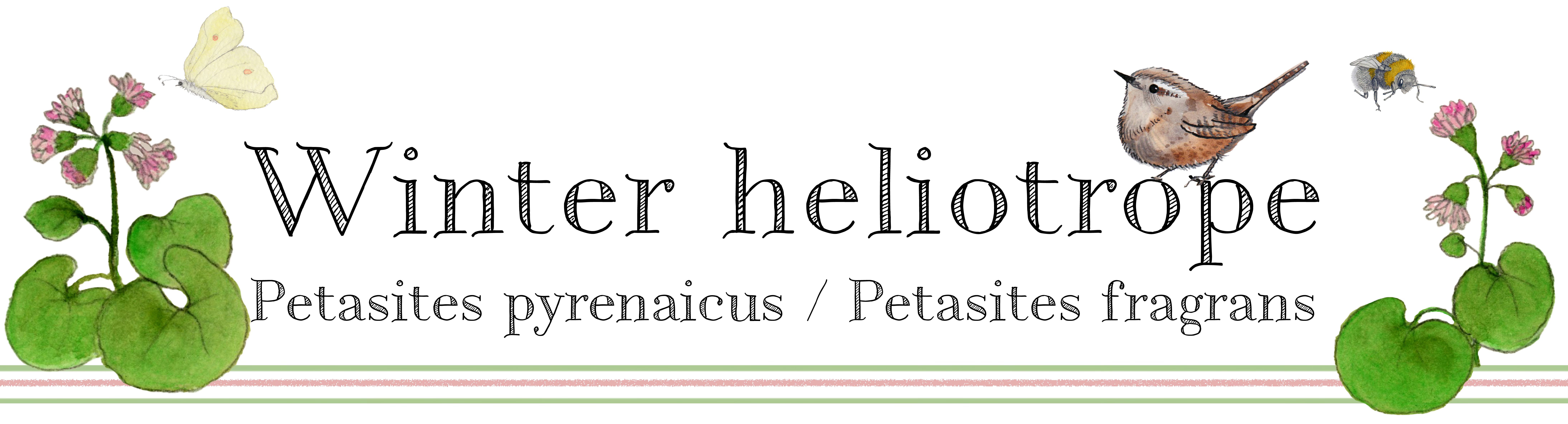
Winter Heliotrope
Petasites pyrenaicus / Petasites fragrans

A wildflower? Or not yet? Like Snowdrops, Winter Heliotrope is an escapee from gardens and churchyards. While Snowdrops made their bid for freedom about 500 years ago - and are now widely regarded as a wild flower - the Winter Heliotrope was only introduced to the British Isles in 1806.
The Winter Heliotrope was known as an ornamental flower that flourished in shady, damp places. Not surprisingly, it found conditions in the British Isles pretty much ideal. Within thirty years it had spread widely and was recorded as a wild flower. Since then it has been flourishing in the British countryside for nearly 200 years, so the wild flower moniker is probably justified by now.
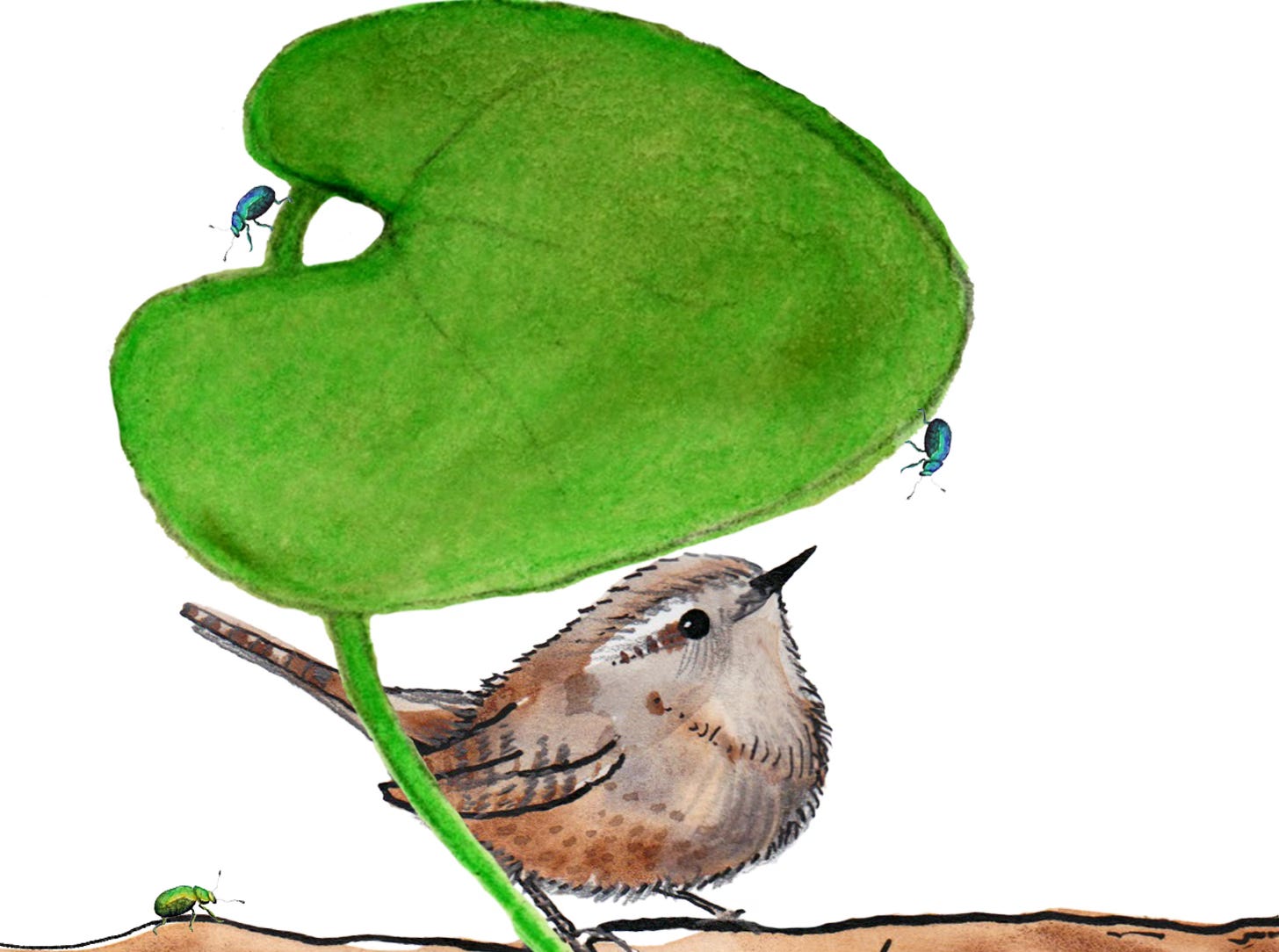
Spreading so fast, does make some gardeners see it as an invasive plant. However, flowering early in the year (they’ve been in bloom in the garden here for a couple of weeks now) makes it a great food source for bees and and other insects at a time when there are few other flowers in bloom. Their fresh leaves - large and round - also provide shelter for little beetles and other creepy crawlies, which in turn provide sustenance for little insect-eating birds which you can often see flitting in and out from under their leaves.
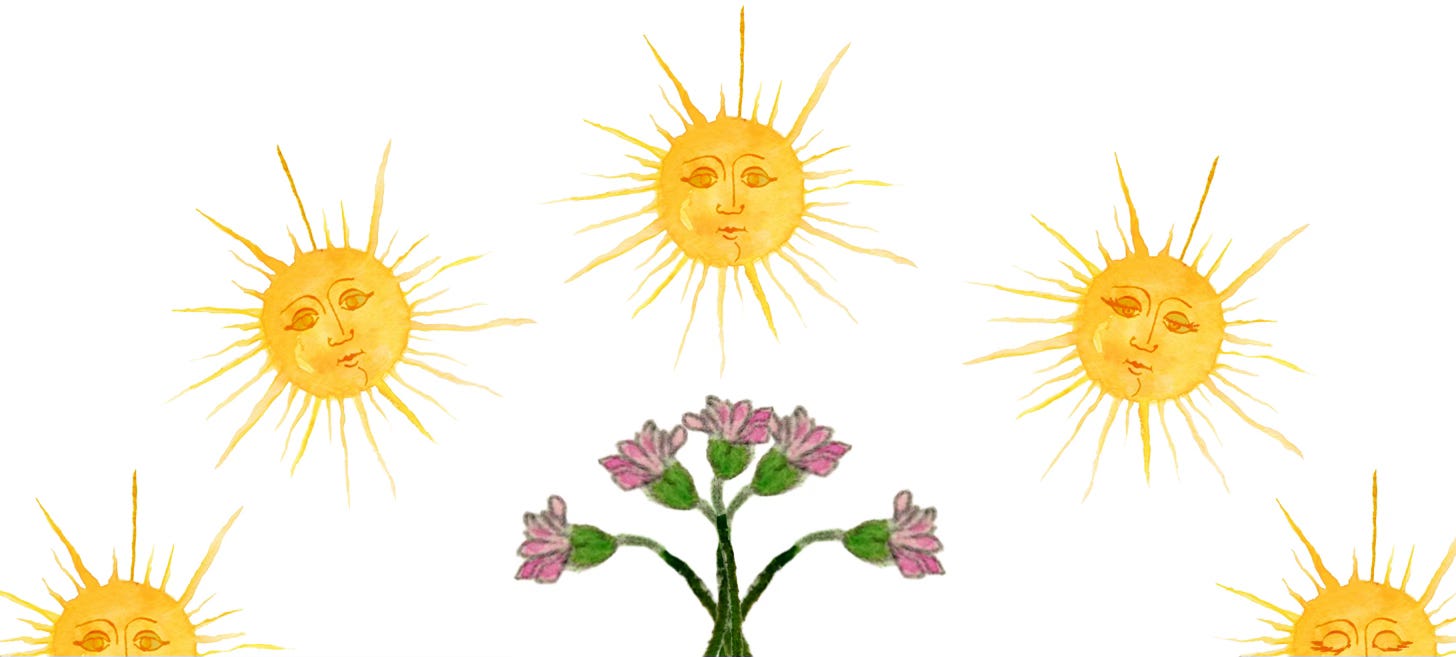
‘Heliotrope’ originates from the Greek word ‘hēlĭotrópĭon’ which is made up of ‘hḗlĭos’ the Greek word for ‘sun’ and ‘trépō’ meaning ‘to turn’. The two words together translate to ‘a plant which turns to face the sun’. And that is exactly what it does. This process is aptly called heliotropism. The chemicals inside the plant respond to the light of the sun, making the flower stalks follow the sun as it moves east to west. In the evening the flower stalks turn east again, ready to worship the sun the next day.
As mentioned in the recent entry for Winter Aconyte, the word ‘winter’ has ancient origins, going back thousands of years when only two seasons were recognised: summer and winter. (You can read more about the origins of the word ‘winter’ here).
Like its giant cousin Butterbur, Winter Heliotrope is a plant in the Petasites family.
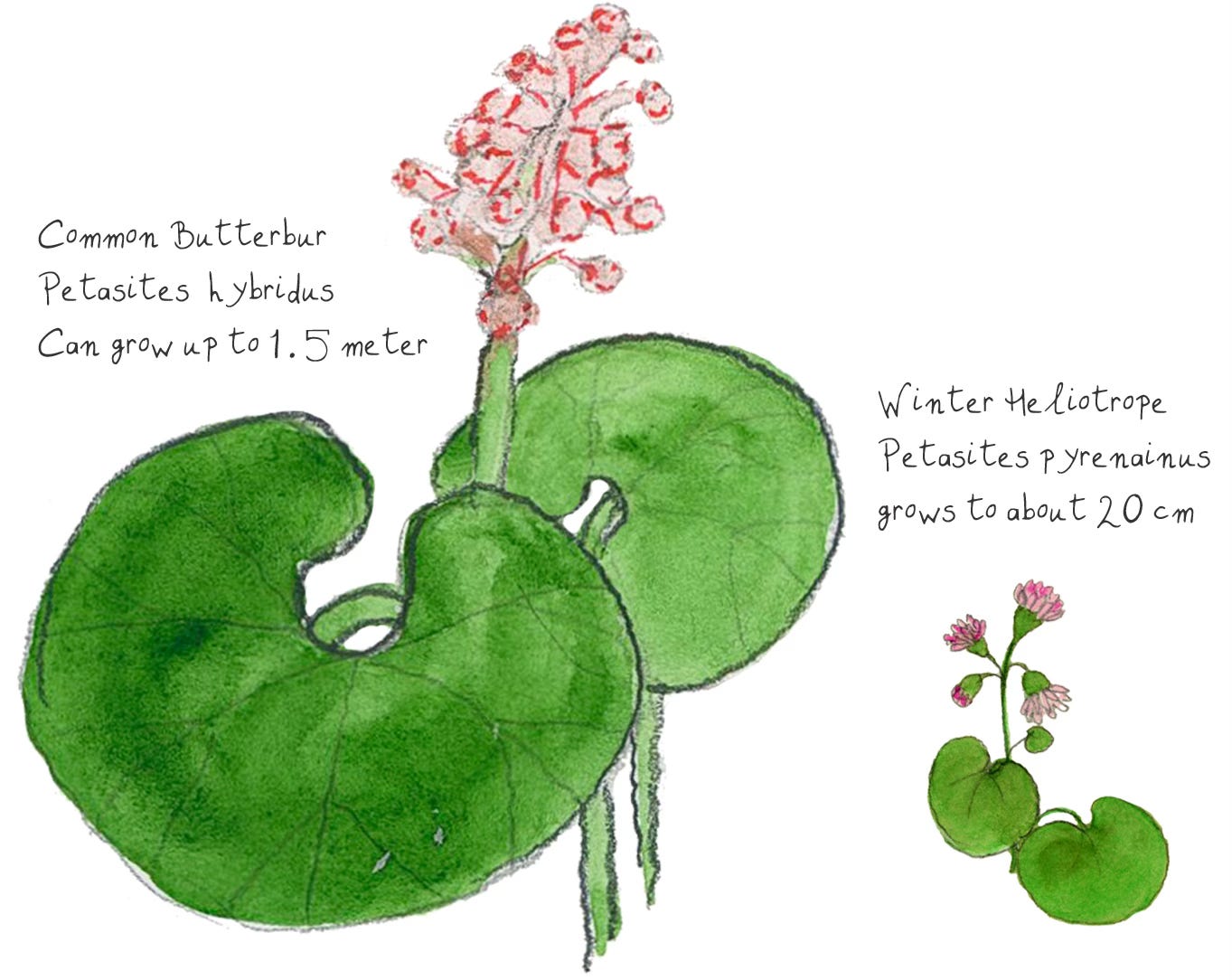
‘Petasites’ comes from the Ancient Greek word ‘petasos’, which was a flat, broad-brimmed hat worn by Greek farmers, hunters and travellers. The large, flat hats are slightly reminiscent of the leaves of both the butterbur and winter heliotrope. You can still see petasos on ancient coins, like on this one, from around 460 BC, depicting Greek King Alexander I wearing his.

The second part of its scientific name is officially ‘pyrenaicus’. It was Linnaeus himself who In 1758 came up with the name after the Pyrenees where the plant was found. But it is also known as Petasites fragrans, a name it was given in 1792 by Bohemian botanist Carl Borivoj Presl. ‘Fragrans’ refers to its sweet scent, usually described as vanilla-like (though having just sniffed some flowers at the edge of the garden, I’d describe it more like marzipan).
Though ‘Pyrenaicus’ is recognised as the official name, Winter Heliotrope grows all over Southern Europe and North Africa. Some recent research suggests that it actually might have originated in North Africa rather than the Pyrenees which may explain why some authorities, including the Royal Horticultural Society, prefer the non-area specific name ‘fragrans’.
Other names for Winter Heliotrope include Bog-Rhubarb, after its liking for damp places, and Cherry-Pie because of its sweet fragrance. Maybe there aren’t many alternative names for the plant as it’s only been here for a couple of centuries. It certainly doesn’t have the usual well-documented folklore stories and medicinal uses associated with it that we find for wildflowers that have been growing here for millennia.
It is used in modern homeopathy though, despite being slightly toxic. Tinctures are made from it and used to help with respiratory problems, pain, skin trouble and digestive concerns. In addition, the lovely sweet smell is said to have a calming and soothing effect. Is it that my sniffing the flowers, to test the smell, is making me feel calm right now? Or is it that glass of red wine, the log fire and the jazz playing softly in the background (‘Peace Piece’ by Bill Evans) that is soothing me?
Flowerology is a reader supported publication. To support my work you might consider to subscribe for free,
buy me a tea (to keep me awake when researching ancient herbals and plant-lore till deep in the night)
or simply click the heart shaped ‘like’ button on the top or bottom of this post (it helps the algorithms apparently). Thank you so much!
If you’re curious about other wildflower names, or are looking for the etymology of a specific wildflower, you can find all flowers covered so far in Flowerology in the alphabetical archive.
You can find a list of all the books used for researching Flowerology in the Reading List which is frequently updated with new etymology dictionaries, herbals and plant lore books.

This newsletter is NOT a field guide for flower identification. It’s often difficult to tell the difference between harmless plants and poisonous plants and some flowers are rare and protected by law, so, NEVER pick or use any plants or flowers if you’re not sure about them.
illustrations and text ©Chantal Bourgonje
Beautifully thorough etymology! The marzipan scent description is more accurate than vanilla—that almond sweetness really does distinguish it. I find it fasinating how botanical naming reveals colonization patterns: pyrenaicus vs fragrans captures the tension between place-based taxonomy and the plant's actual biogeography, especially now that North African origins seem more likley. Your linking heliotropism to the Greek etymology makes the name come alive.
I never knew butterbur was a thing. My brain instantly went to Tolkien’s character Barliman Butterbur, innkeeper at the Prancing Pony in Bree. Apparently Tolkien gave him the surname "Butterbur" because it's a plant name, fitting the botanical theme for Bree's inhabitants, and the plant's large, "fat" nature matched the character. I loved the flat cap illustration…it seems perfect for Barliman! Thanks for the wonderful article!