

Winter aconite
Eranthis hyemalis

John Gerard (1545-1612), barber-surgeon and famous botanist, wrote in his 1,484 page Herbal, that Winter aconite
“is counted to be very dangerous and deadly […] and it is reported to prevail mightily against the bitings of scorpions”
Just touching the plant would render scorpions
“dull, heavy and senseless.”
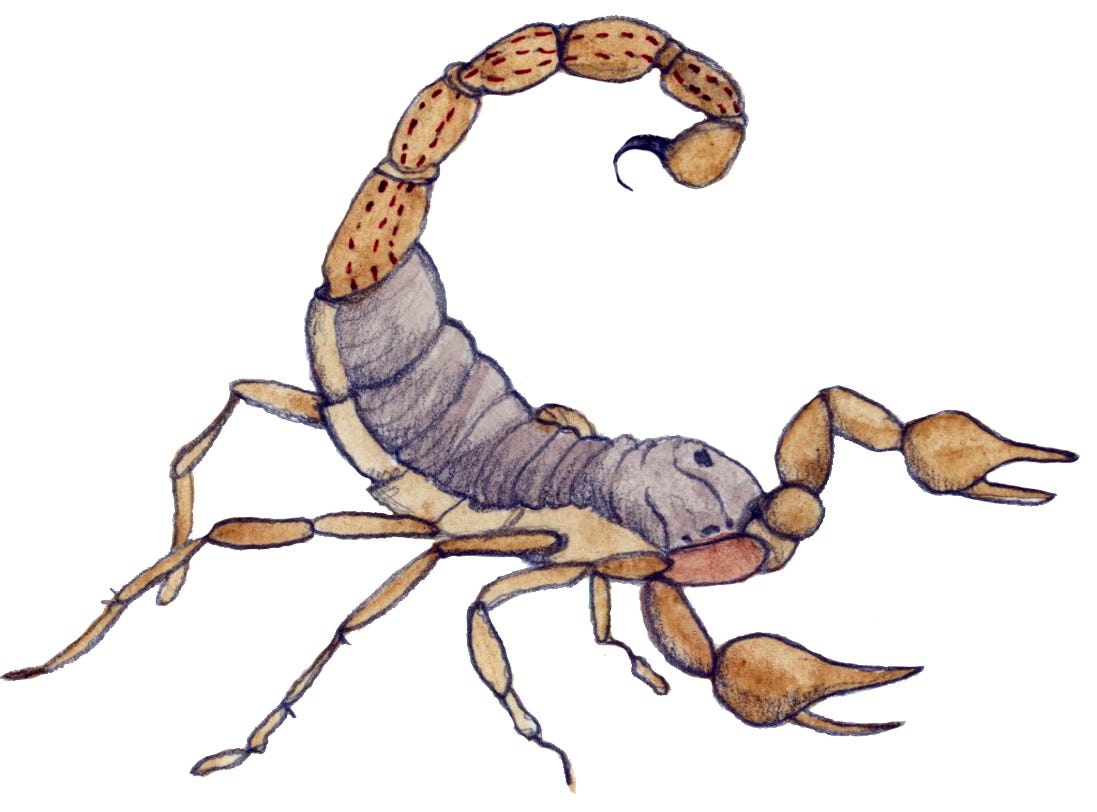
Which one could see could be a problem for scorpions if aconites grew in the deserts and arid places where the scorpions tend to hang out, but the winter aconite prefers rich soil, preferably in shady woodlands. So scorpions don’t have too much to worry about. On the other hand, human beings would be unlikely to benefit from aconites “prevailing mightily’ against scorpion “bitings”, unless they were lucky enough to stumble across an apothecary who happened to have some aconite in his war chest that he’d collected from distant climes. A bit of a long shot.
But as Gerard wrote, the plant can be deadly. It contains a poisonous alkaloid called aconitine which apparently tastes so disgusting that most creatures wouldn’t be tempted to eat more than a tiny bite. Which would cause nausea, vomiting and heart trouble. A small mouthful wouldn’t kill you (usually), but probably best not risk it - whether you’ve been stung by scorpion or not.
There are various theories regarding the derivation of the word. The first is that it comes from the Greek word ‘Akoniti’ or ‘a-konis’ which literally means ‘without dust’.
The dust referred to was the dust from the palaestra where ancient Greeks practised pankration (a combat sport, invented by the Greek demi-gods Heracles and Theseus) which was conducted in the nude using wrestling and boxing techniques. The winner would be ‘without dust’, in that he wouldn’t have landed or been thrown onto the dusty ground. The term became a synonym for invincible. Aconite’s poison was said to be invincible and the name stuck.
The second theory is brought forward by Maud Grieve (1858-1941), who believed it might have come from the Greek word ‘ankontion’, which means ‘dart’. The suggestion was that ancient barbarian people used the toxins from the plant to poison the tips of their long, waited darts, and the plant became associated with that use.

The word ‘winter’ is ancient, and goes back thousands of years to a time when people only recognised two seasons: summer and winter. In some areas they also recognised spring, but autumn (or fall) as a recognised season only came into common use much later. Linguists have concluded that the people from whom we inherited our European languages lived in southerly areas where summer generally transforms quite quickly into winter.
Etymologists are not sure about ‘winter’s’ origin but have put forward various theories including it coming from the root of ‘wind’ - the windy season; another that it came from the Gaulish ‘vindo’ (or old Irish ‘find’) meaning ‘white’ - hence the white season; and a third theory that it comes from the ancient PIE word ‘wed’, the root of the Old-English word ‘wæter’ (water) and ’wæt’ (wet). Thus making ‘winter’ the ‘wet season’.
So, the white, wet or windy season - take your pick. They all sound possible.
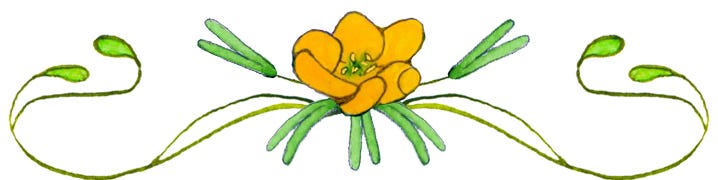
The Latin word ‘hyemalis’ means “winter-flowering”,and eranthis comes from the Greek word ‘er’ meaning ‘spring’ and ‘anthos’ ‘flower’ - making Winter aconite’s scientific name: winter-flowering spring flower. It does indeed flower early in the year, usually between January and March, around the same time as Snowdrops.
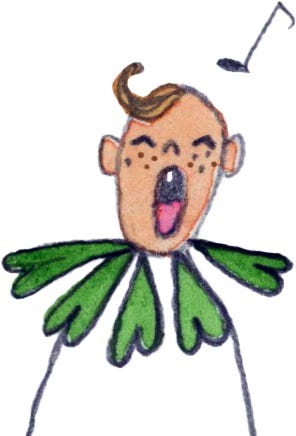
Other words for Winter Aconite are: Choirboys (after the ‘collar’ of leaves underneath the flower), Winter Hellebore, Winter Wolf’s Bane (note that it is not a hellebore or a wolf bane), Christmas Rose, New Year’s Gift and Devil’s Wort.
Flowerology is a reader supported publication. To support my work you might consider to subscribe for free,
buy me a tea (to keep me awake when reading ancient herbals and plant-lore till deep in the night)
or simply click the heart shaped ‘like’ button on the top or bottom of this post (it helps the algorithms apparently). Thank you so much!
If you’re curious about other wildflower names, or are looking for the etymology of a specific wildflower, you can find all flowers covered so far in Flowerology in the alphabetical archive.
You can find a list of all the books used for researching Flowerology in the Reading List which is frequently updated with new etymology dictionaries, herbals and plant lore books.
This newsletter is NOT a field guide for flower identification. It’s often difficult to tell the difference between harmless plants and poisonous plants and some flowers are rare and protected by law, so, NEVER pick or use any plants or flowers if you’re not sure about them.
illustrations and text ©Chantal Bourgonje
Thank you for the Re-stack!