

Germander Speedwell
Veronica chamaedrys

Germander Speedwell is a pretty flower with some unusually sinister alternative names: Mother-Die, Blind-Flower, Hawk-your-mother’s-eyes-out and Devil-Eyes.
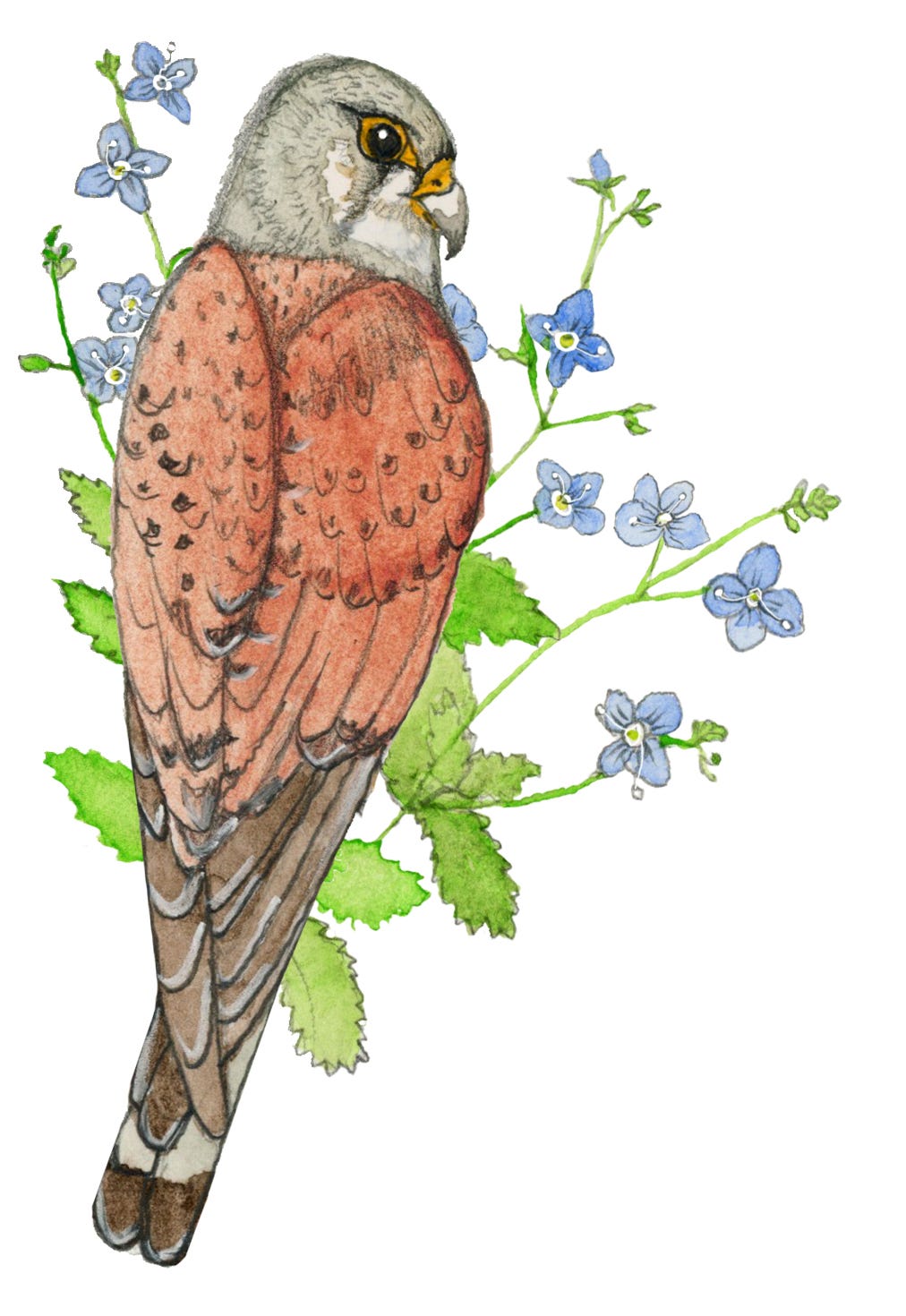
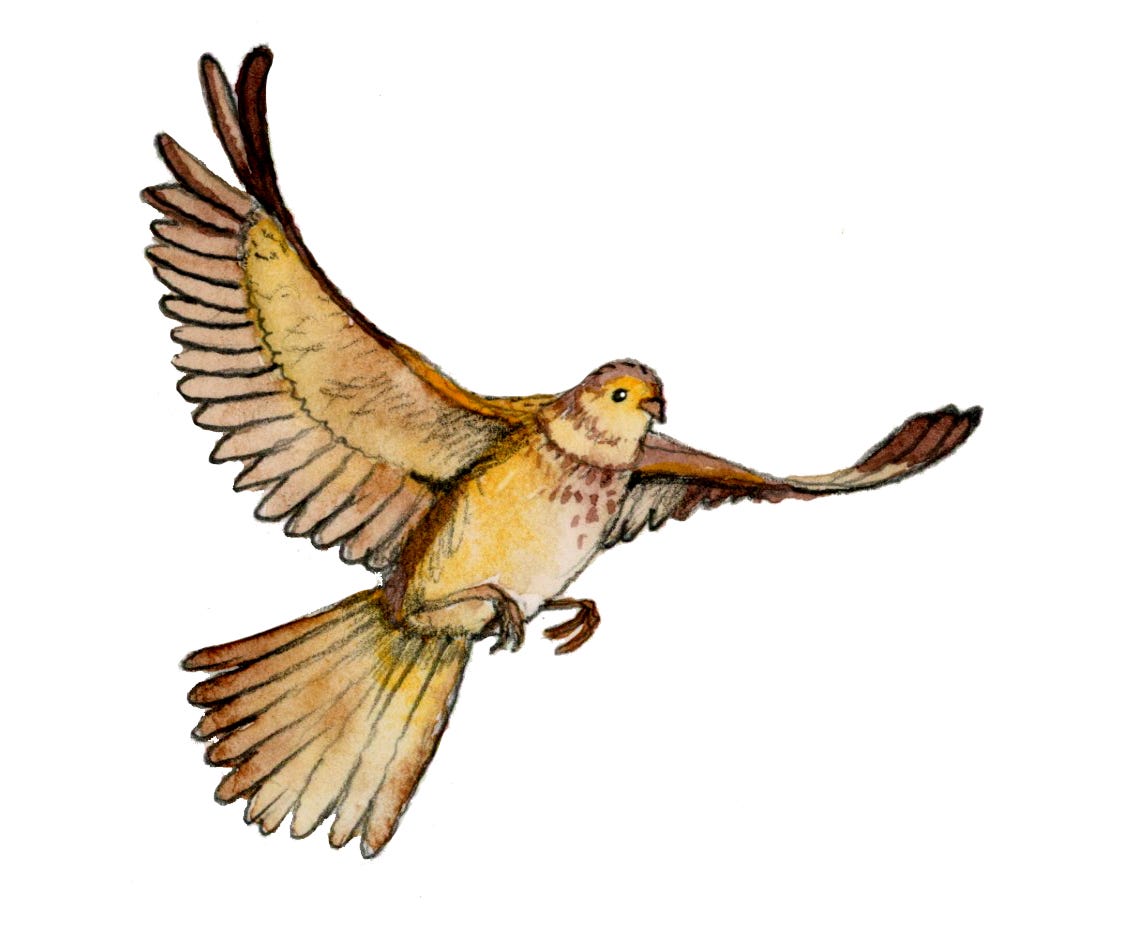
These names come from the old folklore belief that if you picked the little blue flowers, a bird would appear and peck your eyes out. Or alternatively your mother’s eyes would drop out, or she would drop dead on the spot. And in some places it was believed that if you looked at the flower for any length of time it could make you go blind.
On the other hand it was also believed that you could use Germander Speedwell to reverse spells. It all depended, as we’ve seen before, on where you were in the world. In Ireland for example, where it’s sometimes known as Wish-me-well, it was one of seven wildflowers that was said to protect you from all things supernatural. The other six being St John’s Wort, Verbena (Vervain), Eyebright, Mallow, Yarrow and Self-heal.
Also in Ireland, those contemplating long and potentially hazardous journeys, used the plant as a charm against accidents and possible malevolent forces. They gained protection by sowing the flowers into the seams of their clothing before they set off. This practice is where we find the origin of the word Speedwell, with its association of people parting and going on journeys. The Anglo-Saxon word for prosperity, ‘spēd’ combined with ‘wel’ (old English for ‘well’) makes ‘Spēd wel’, used to wish someone prosperity on parting (as in ‘Godspeed’) and similar to saying ‘Farewell’ in more modern times, becoming a common way of saying ‘Goodbye’.
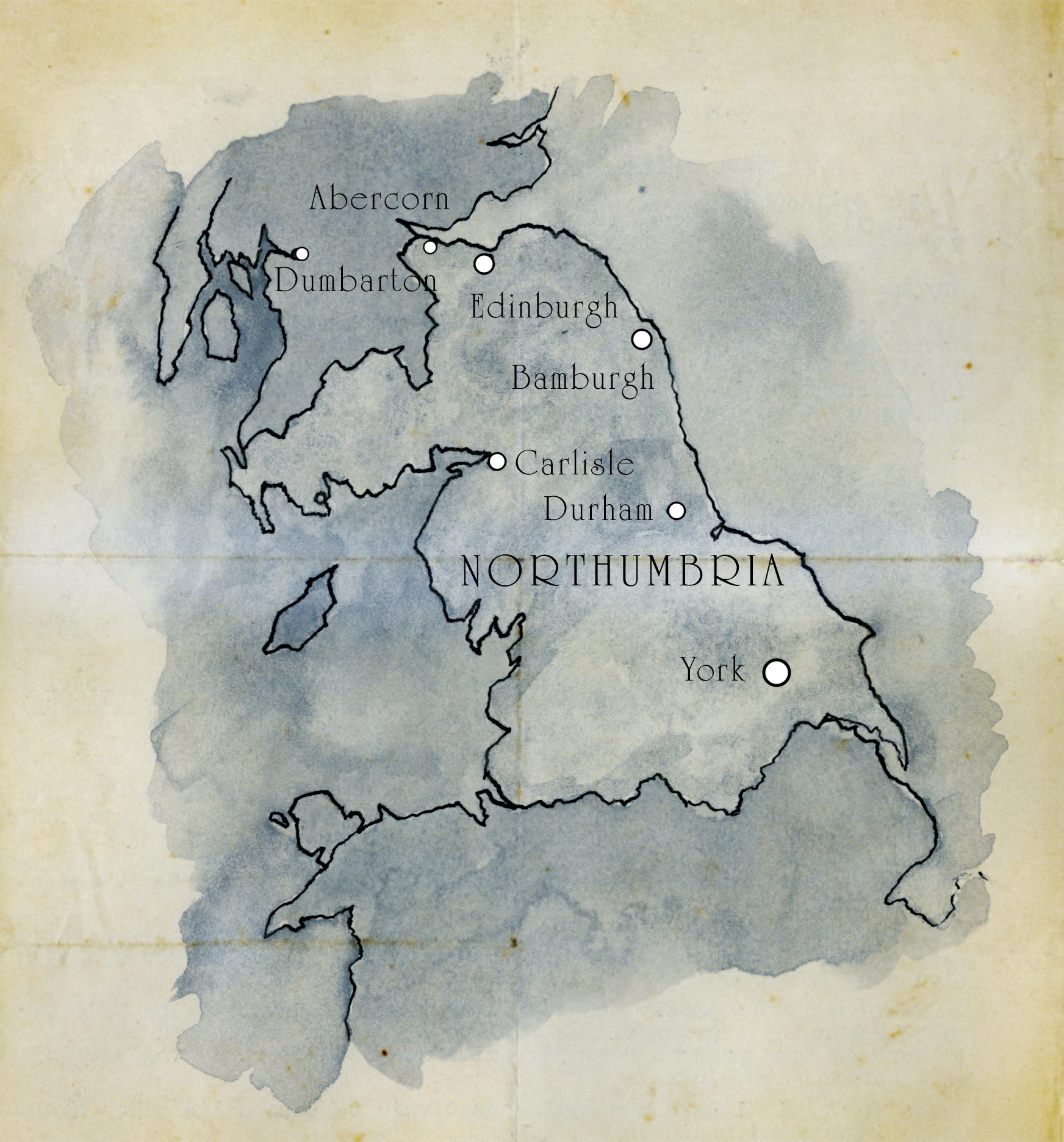
In some northern areas of England ‘Germander Speedwell’ is known as Strike-fire and Thunder-flower. It was believed that picking the flowers would cause a thunder storm. This superstition has also been recorded in Germany which seems like a strange coincidence for such an unusual belief. But there is a connection: between the 5th and 7th century, the Angles and Saxons travelled from Germany and eventually settled in what was then called the kingdom of Norþan-hymbre (Northumbria). Maybe they took this superstition with them.
The word Germander comes from the French word ‘Gamandrée’, which is derived from the Latin word Chamadrys and which in turn came from two Greek words: ‘Chamai’ meaning ‘on the ground’, and ‘Drys’, the word for Oak. This is also the origin of the species name ‘chamaedrys’, which basically means Ground-Oak. Somewhere, someone thought the leaves looked like tiny oak leaves growing low over the ground.
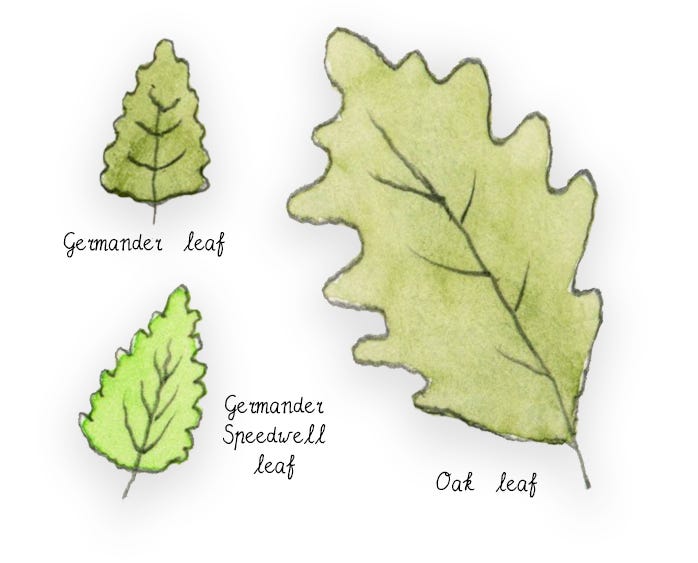
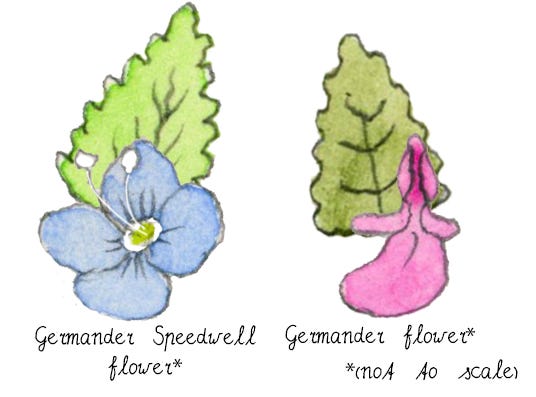
For the same reason, ‘chamadrys’ is also the origin of the name of another wildflower, ‘Germander’ (Teucrium chamaedrys) which is a plant in the mint family. To confuse things further, ’Germander Speedwell’ (Veronica chamaedrys) was also known as ‘Wild Germander’ up until the 19th century. The two plants, despite belonging to different families (mint and plantain), have been mixed up over the centuries in different manuscripts and herbals. For example, some texts claim that Germander Speedwell cured Roman Emperor Charles V (1500-1558) of gout. But that was originally attributed to the Teucrium chamaedrys Germander. As if finding effective remedies wasn’t hard enough in those days, scholars misnaming plants added to the not inconsiderable challenge.
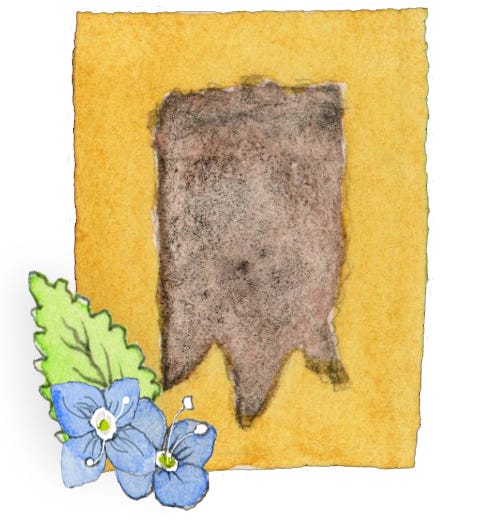
Then there’s the ‘Veronica’ part of the scientific name. The pale markings in the middle of the flower were thought by the scholar who came up with the name, to look like the impression on the Veil of Veronica. This Veronica was said to have taken pity on Jesus as he was carrying the cross to calvary, wiping his face gently with her veil, leaving his impression on the material. The cloth is said to have miraculous powers, and has been kept in the Vatican since the 700s. But there are other veils that claim to be Veronica’s too, including one kept in Manoppello, Italy, the only one which has been scientifically tested (in the 1970’s). They were not able to date the veil, but did identify the material as being Sea silk (byssus), which has been made since ancient times.
20th Century herbalist Maude Grieve mentions Germander Speedwell as a plant that ancient healers spoke highly of as a wound cleanser and curative. They also recommended it for healing skin complaints, small pox and measles. John Gerard (1545-1612) recommends it for cancer and to cool fevers as a result of pestilence. Belgian herbalist Rembert Dodoens (1517-1585) named it “Ereprijs” in Dutch/Flemish, which means Prize of Honour, in recognition of its powerful healing properties.
Other names are: Bobby-Eyes or Robin-Eye (like a blue version of Robin Goodfellow - see Herb Robert), Bird’s Eye, Lark’s Eye, Mother-breaks-her-heart, Pick-your-mothers-eyes-out, Tear-your-mother’s-eyes-out (there seem to be a lot of names referring to removing eyes from mother’s faces), Angel’s Eyes, Eye-of-Christ, Billy-bright-eye. Blue Bird’s Eye, Blue Bonny Bird Eye, Blue Star, Stir, Cat’s Eyes, God’s Eye, Jerrymander, Lady’s Thimble, Milkmaid’s eye, Poor man’s tea and Remember-me.
If you are looking for the etymology of a specific wildflower, you can find all flowers covered so far in the alphabetical archive. A list of all the books used for researching Flowerology are in the Reading List.
Flowerology is a reader supported publication. To support my work you might consider to subscribe for free,
buy me a tea to help keep me going when researching mountains of ancient herbals, plant-lore and etymology books till deep in the night (Thank you!)
or simply click the heart shaped ‘like’ button at the very top or bottom of this post. Thank you so much!

This newsletter is NOT a field guide for flower identification. It’s often difficult to tell the difference between harmless plants and poisonous plants and some flowers are rare and protected by law, so, NEVER pick or use any plants or flowers if you’re not sure about them.
illustrations and text ©Chantal Bourgonje