

Forget-me-not
Myosotis palustris / scorpioides

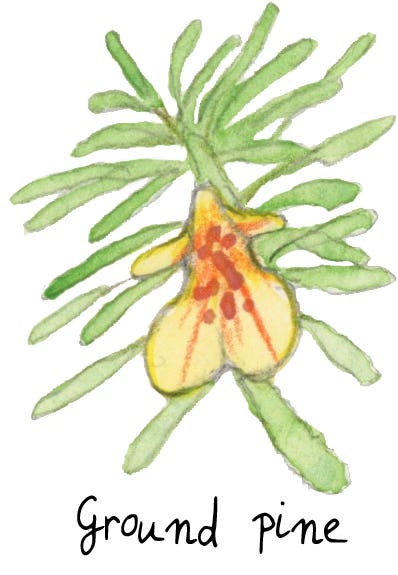
When Richard Prior M.D. wrote his book on the origin of plant names back in 1863, Forget-Me-Nots had only been known as ‘Forget-Me-Nots’ for about 40 years. Before then, their common name was ‘Mouse-Ear-Scorpion-Grass’ (a bit of a mouthful, explained later). And what we now know as Ground-Pine, Ajuga chamæpitys, was the ‘Forget-Me-Not’ of its day, named due to the unpleasant lingering aftertaste that you’d be unlikely to forget, if you were reckless enough to nibble it.
Richard Prior was not impressed by the change of name. He wrote that herbalists like Gerard, Lyte, and Lobel, had all been calling the Ajuga chamæpitys ‘Forget-Me-Not’ since the 15th century and there was no good reason to change it. He was quite adamant on the subject.
So what was it that happened for the name to change? And make it stick?
It goes back to the industrialisation of the nineteenth century and the widespread romantic reaction to it, with fairytales and folktales gaining popularity across the land. The story that resulted in the name-change of Myosotis palustris was in Mill’s “History of Chivalry” published in 1825. It was a tragic tale - making it even more popular - and it went something like this:
A medieval knight and his lady were walking along the Danube, when the knight spotted some little blue flowers by the edge of the river. He bent down to pick them for her, but lost his balance and fell into the river. Then, tragically, the weight of his harness started dragging him under. Even as he was being swept away to his death, the galant knight threw the pretty little bunch of blue flowers to his lady love, while calling out plaintively, “Forget me nooooooot!”
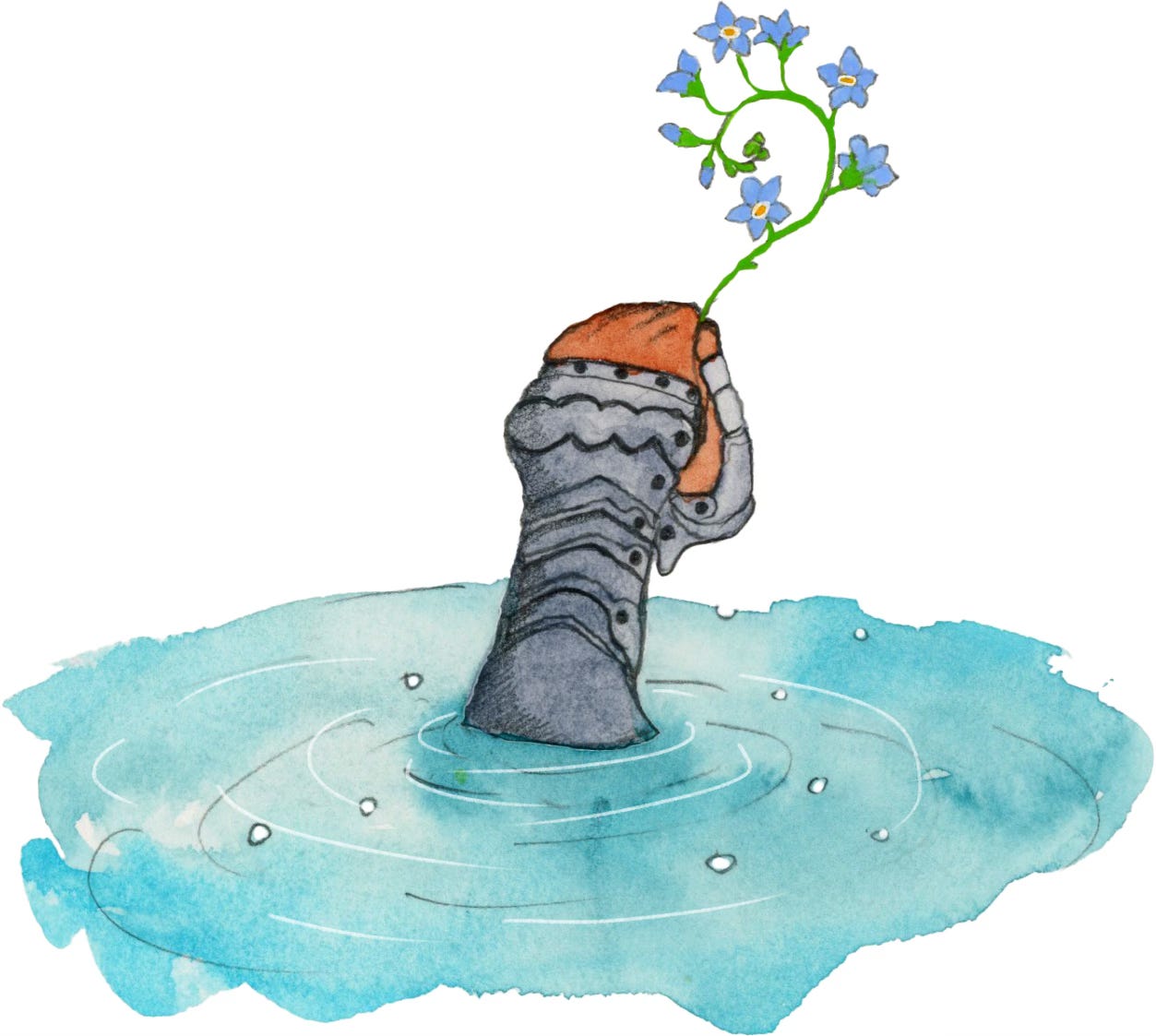
The tragic tale soon became popular, and with its popularity so too the name of the pretty little flowers, that had previously been known as ‘Mouse-Ear-Scorpion-Grass’, and which was the waterside flower suspected of being in the knight’s posy, was re-christened. From then on it was known as ‘Forget-Me-Not’, the forces of romantic fiction proving stronger than old Richard Prior’s curmudgeonliness..
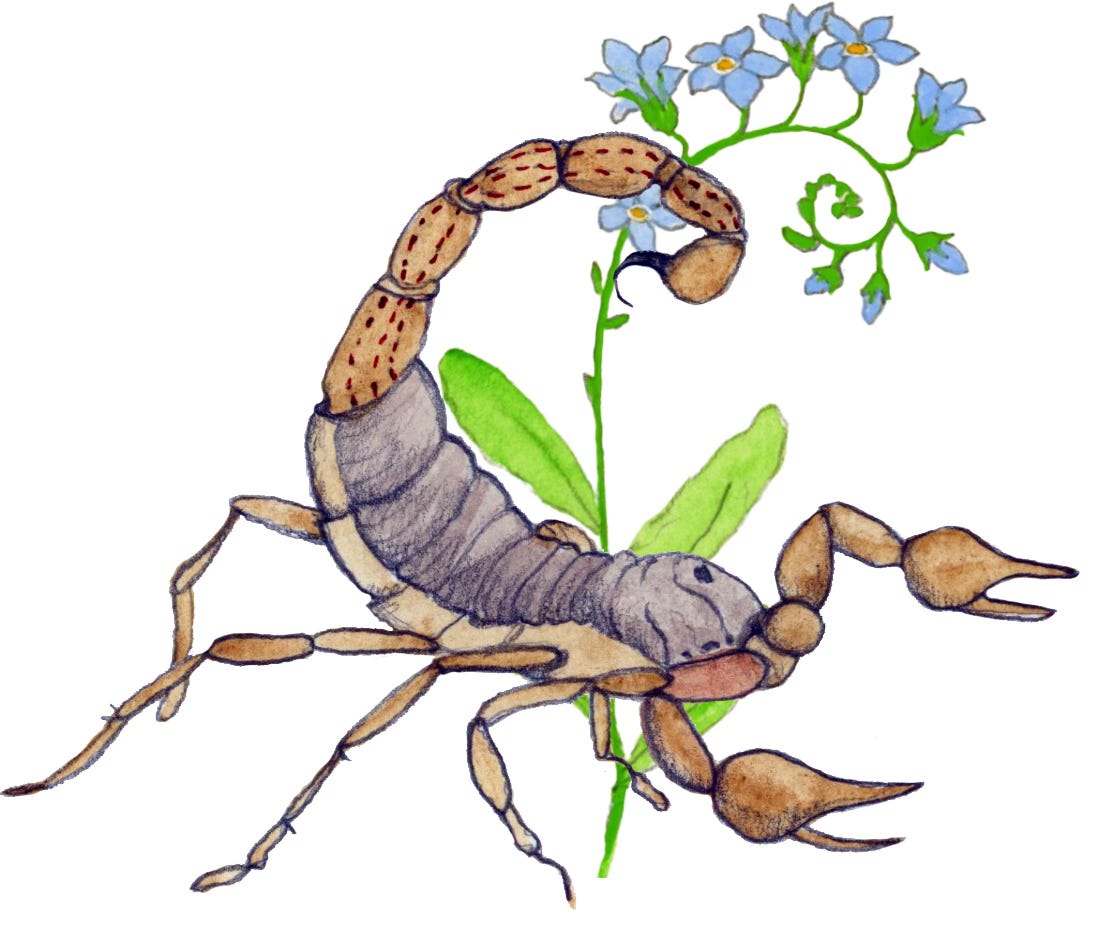
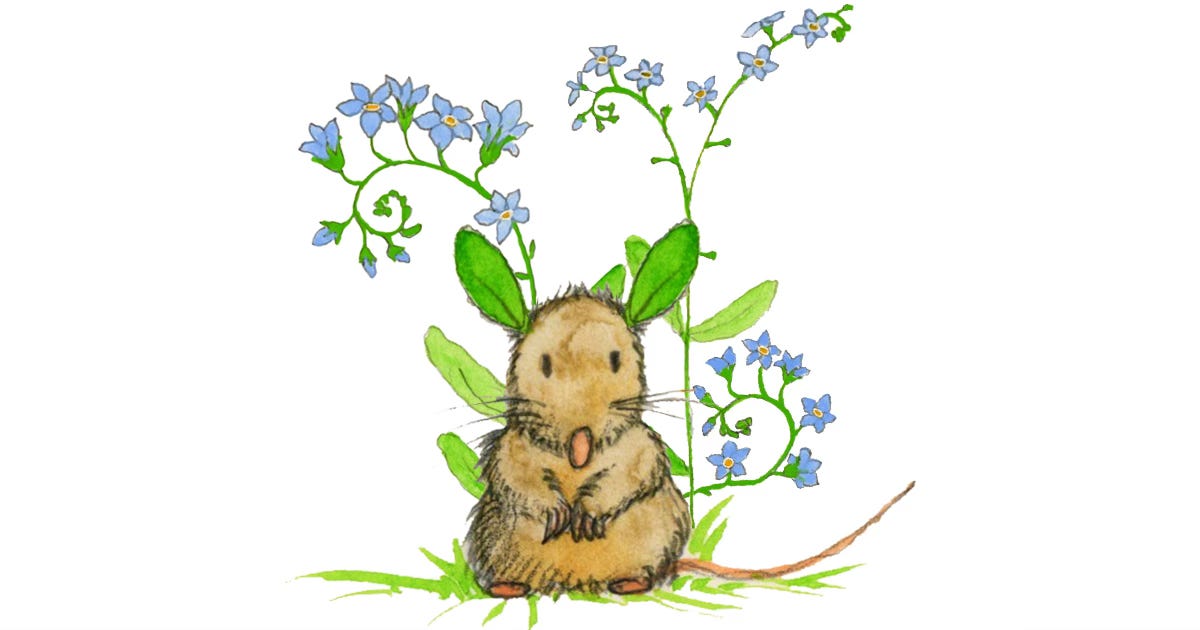
All was not lost though for Richard, the scientific names survived and meant pretty much the same thing: Myosotis means ‘mouse ear’; scorpioidus means ‘resembling a scorpion’ and palustris means ‘of the marsh’, which is where it likes to grow. The scorpion reference (and you do need a bit of imagination for this one) is due to the way the flower clusters curve or bend the flower stalk outwards, like a scorpion’s tail, at the beginning of flowering.
And Mouse ear, because of the shape of the plant’s leaves.
There is another major association between Forget Me Nots and Romantic love. In 1889, T.F. Thiselton-Dyer recorded a story about and Angel who fell in love with a human.
He had seen her sitting by a river, weaving little blue flowers in her hair. Unfortunately, falling in love with humans is strictly forbidden amongst angels and he was no longer allowed to enter the garden of Eden. There the angel sat, desperately crying by the gates. God took pity on him and told him he was allowed to return to Eden if the girl he was in love with planted the little blue flowers in every corner of the world. To speed up this process, the angel returned to earth to help her. And together they went round the world hand in hand, planting Forget-Me-Nots everywhere. (this story will likely resonate with a few gardeners, and we’re not exactly short of Forget Me Nots in this neck of the woods either). When they had finished all the planting(it even grows in Alaska), they were both allowed to enter the Garden of Eden. Thus making the girl immortal.
Like many early spring flowers (e.g. Primroses, Cowslips) Forget-Me-Nots have a connection with fairies. In some folklore they protect us from bad fairies, if you decorate your houses and stables with the flowers in spring. In others they can be used to summon fairies, so long as you know the special places fairies tend to hang out.
Other words for Forget-me-nots are: Water-forget-me-not, True-forget-me-not, Water Scorpion Grass, Marsh Scorpion Grass, Mouse-Ear Scorpion Grass, Scorpion Weed, Love-me and Snake Grass.
Flowerology is a reader supported publication. To support my work you might consider to subscribe for free,
buy me a tea to help keep me awake when researching ancient herbals and plant-lore books till deep in the night (Thank you!)
or simply click the heart shaped ‘like’ button on the top or bottom of this post (it supposedly helps the algorithms). Thank you so much!

If you are looking for the etymology of a specific wildflower, you can find all flowers covered so far in Flowerology in the alphabetical archive.
A list of all the books used for researching Flowerology are in the Reading List which is frequently updated with new etymology dictionaries, herbals and plant lore books.
This newsletter is NOT a field guide for flower identification. It’s often difficult to tell the difference between harmless plants and poisonous plants and some flowers are rare and protected by law, so, NEVER pick or use any plants or flowers if you’re not sure about them.
illustrations and text ©Chantal Bourgonje
Zal nu ik dit weet vergeet-mij-nietjes plant toch eens beter bekijken. Vergelijking details muizenoortjes blaadjes en schorpioenstaart groei zijn te leuk en om nu op te letten. Uhm verdronken ridder vergeet ik nu ook niet meer....
I just accidentally weeded out all the forget me nots I carefully planted last year in my border. Furious with myself!