
Ragwort
Senecio Jacobaea, synonym: Jacobaea vulgaris

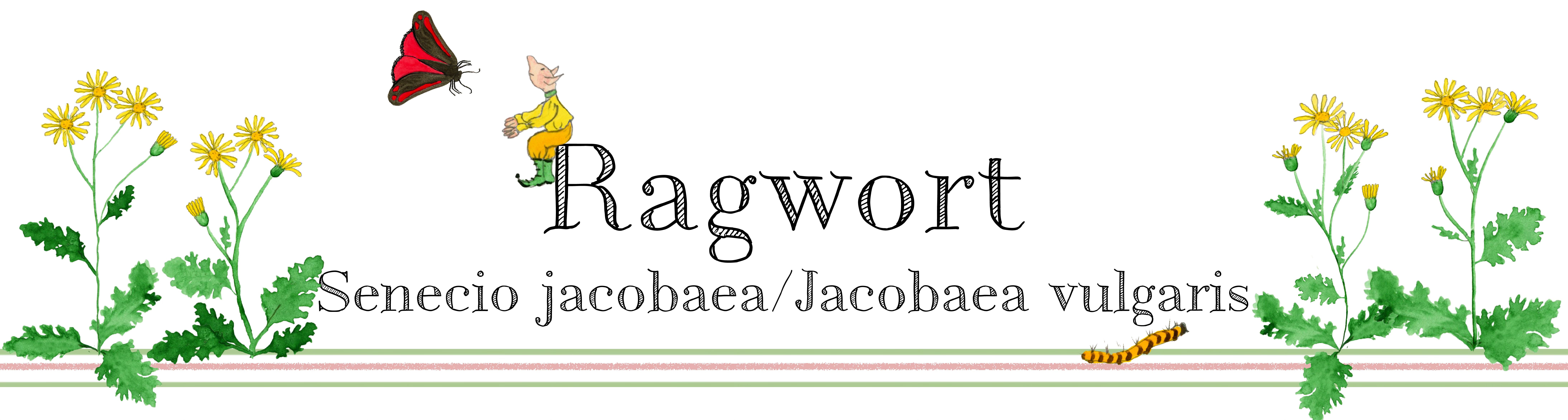
The ‘rag’ part of the word ‘Ragwort’ came over to Britain with the Vikings. The Old Norse word rögg and the Old Danish word ‘rag’ meant ‘shaggy tuft’, or ‘rough hair’. The ‘wort’ part of the name comes from the Anglo-Saxon word ‘wyrt’ meaning ‘plant or herb’. Hence, ’Shaggy plant’. Looking at their ragged leaves, you can see why the name stuck.
Ragwort is also known as St James wort and Jacoby (‘Jacobaea’ featuring in both scientific names). St Jacob, (also know as St James), was the son of Prince Gefal and lived in 3rd and 4th century Mesopotamia. He was an unusual type of hermit known as a ‘grazer’. Grazers were early Christians who only ate raw vegetable matter, often on their hands and knees, grazing like animals (no problems with their roughage intake then). They dressed in clothes made of leaves and other plant-based materials. If none were available, they’d go about their business naked.
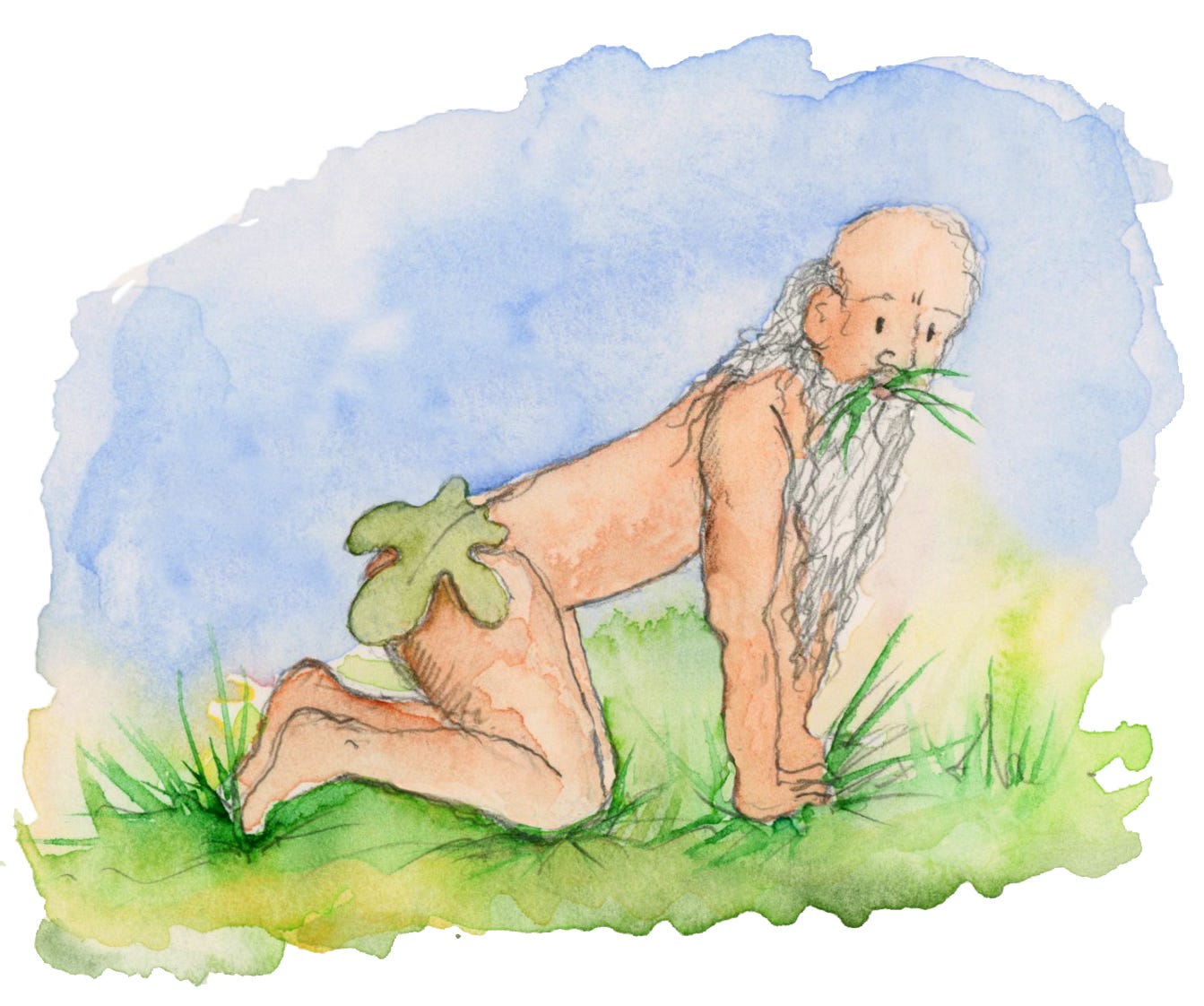
St Jacob performed a range of miracles on his journeys and constructed the first Christian church in Nisibis (in what is now Turkey near Syria) around 320AD. Later he was ordained bishop of the church he built.
What does any of this have to do with Ragwort? There are two connections. Firstly, St Jacob’s day is on the 25th of July when Ragwort is in full bloom. Secondly, he is the patron saint of horses. Although Ragwort is highly poisonous to horses and other grazing animals, it is also known as the ‘Fairies’ Horse’.

As we saw with the Marsh Marigold, back in those days fairies were not considered the good-natured creatures we see them as today. They were regarded as lackeys of the devil and the bringers of grief and sorrow.
According to folklore, fairies used to ride Ragwort, straddling a bunch of its stalks as if on horseback, and witches used it for their night time travels (T.F. Thiselton-Dyer - 1889). The poet Robert Burns (1759-1796) wrote that warlocks and witches used to ride Ragwort “over the moors […] with wicked speed”. In the Hebrides, there were tales of fairies riding Ragwort to hop from island to island.
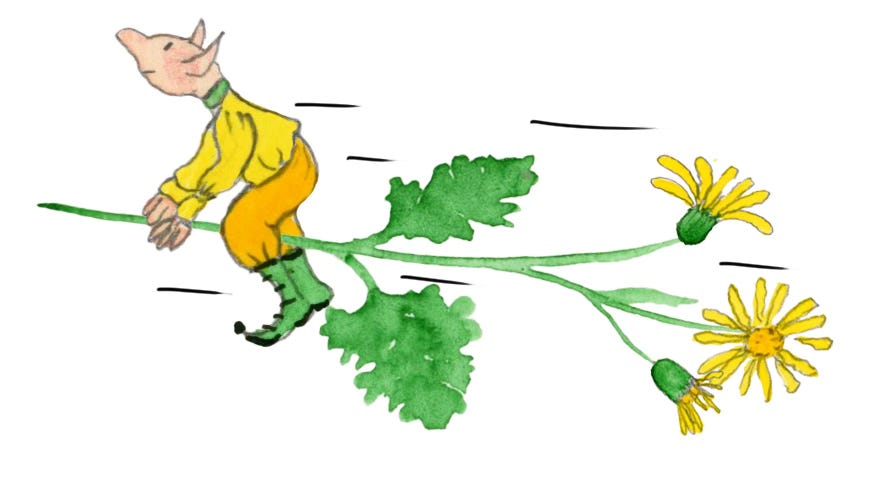
Robert Hunt (1808-1887), collector of Cornish fairy-lore, even claimed he knew of eye witnesses (conveniently long dead) who had seen witches flying to Castle Peak (a rock in Cornwall) on stems of Ragwort. Sadly, long before Hunt’s time, much of the negative folklore attached to fairies had been transferred to witches in attempts to justify the witch hunts of the 16th and 17th centuries. Which may well be where the idea of witches riding on broomsticks originated.
Other folklore claimed that if you trod on Ragwort after sunset, horses would rise up from the roots of the damaged plant and ride away with you, never to be seen again.
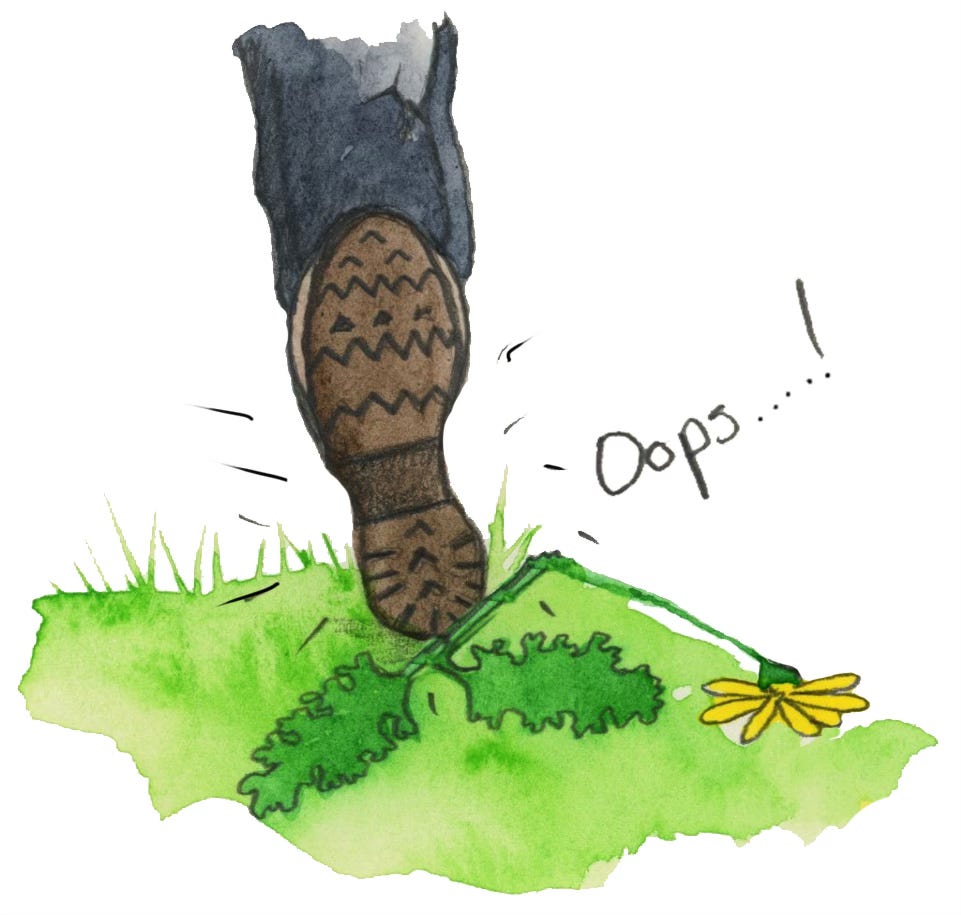
You could be taken to an other-worldly fairy realm where time ran at a different speed. A short period there could be decades in the human world, so by the time you escaped or somehow managed to get back to the human realm, you could well find yourself already dead or, if you were lucky, just extremely ancient. Which takes us to the ‘Senecio’ part of the first of the scientific names for Ragwort. As we’ve already seen with Groundsel (otherwise known as ‘Gnomes’ Shavingbrush’), Senecio comes from the Latin word ‘senex’ which means ‘old man’ and refers to the fluffy greyish white seed-heads. The ‘vulgaris’, part of the other scientific name for Ragwort, is the much used term for ‘common’.

Back to the common name: R.C.A. Prior M.D. writes, in his plant etymology book of 1879, of a possible confusion with the German word ‘Ragwurz’, which in Germany is the name given to wild orchids of the genus Ophrys rather than for Senecio Jacobaea. The ‘Rag’ part of the name comes from Middle/Low German and means prostitute or loose woman. Prior, a true Victorian, could only bring himself to write of the derivation that it was:
“A term of indecent meaning, expressive of supposed aphrodisiac virtues.”
Other names for Ragwort are: St James’ Ragwort, St James Weed, Staggerwort (it was said that it could cure ‘staggers’ in horses, but is actually more likely to cause them), Bundweed, Fairy Horse, Ragweed, Stinking Nanny (it doesn’t smell great), Dog Standard, Cankerwort, Stammerwort, Devildums, Stinking Alisander, Yellow Boy, Stinking Billy, Dog Stalk and Fizz-gigg.

Flowerology is a reader supported publication. To support my work you might consider to subscribe for free, buy me a tea (to keep me awake when reading ancient herbals and plant-lore till deep in the night) or simply click the heart shaped ‘like’ button on the top or bottom of this post (it helps the algorithms apparently). Thank you so much!
If you’re curious about other wildflower names, you can find all flowers covered so far in Flowerology in the alphabetical archive. And you can find a list of all the books used for researching Flowerology in the Reading List which is frequently updated with new etymology dictionaries, herbals and plant lore books.
This newsletter is NOT a field guide for flower identification. It’s often difficult to tell the difference between harmless plants and poisonous plants and some flowers are rare and protected by law, so, NEVER pick or use any plants or flowers if you’re not sure about them.
illustrations and text ©Chantal Bourgonje
Nice to read about ragworts. I had a post that was sort of similar - but without the brilliant illustrations - but from the point of view of the cinabar moth:
https://open.substack.com/pub/greeningroningen/p/cinnabar-moth